After Dark
The Moths
882 moth species are confirmed on 30 riparian acres, including 469 first iNaturalist records for Tioga County. That county-first total strengthens a thin public baseline; it does not make every species rare. The clearest property signal is a broad fauna spanning humid creek margins, wetland edge, northern-hardwood slope, and oak-hickory upland. With 266 wild or established plant species recorded, the most informative next gains should come from sugar bait, canopy lighting, cold-season surveys, dusk walks, and host-focused searches.
Arthropod richness at a stream-hardwood edge runs 35–50% above comparable upland sites. The transition between water and forest stacks microhabitats and host-plant niches that a uniform woodland can't provide.
Dry air below ~65°F suppresses moth flight — but creek-side humidity counters that within 50–100 m of the bank. Marginal nights that shut down upland sites often stay productive here.
2–3× the NY mixed-hardwood baseline. Eastern Lepidoptera are mostly host-plant specialists; 266 wild/established plants × ~1.8 predicted moths per plant species predicts ~479. Observed: 882 — the creek concentrates the high-value host genera, which pushes the count above the prediction.
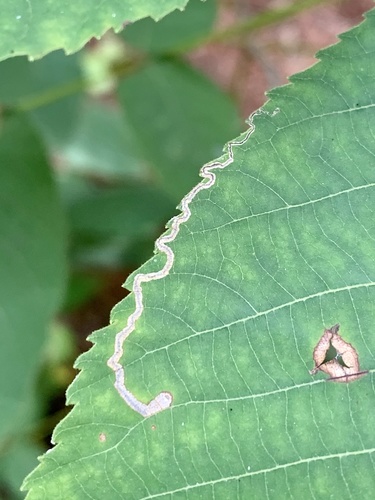
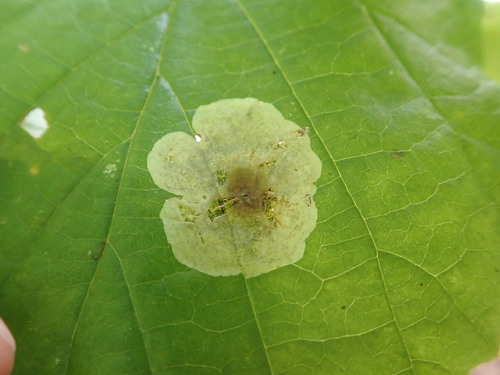
The late-August additions sharpen the host-search map. A provisional Polymorphic Pondweed Moth identification and a research-grade Spotted Peppergrass Moth record make pondweeds and peppergrass useful inspection targets; provisional Oak Skeletonizer, Beech Midget, oak-feeding Stigmella, and Thistle Stem Borer identifications point toward oak leaves, beech leaves, and thistle stems. These adult records are survey leads, not proof of larvae, breeding, or host use here. Search for mines, skeletonizing, rolls, borings, frass, or feeding sign, and photograph the evidence with the identified plant.
In Pictures
Recent Moths
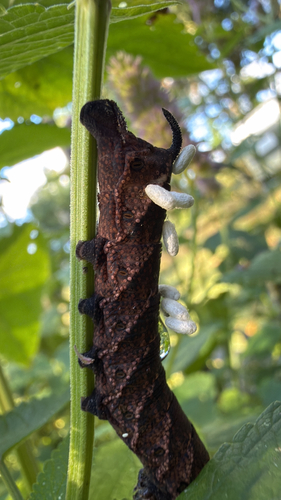
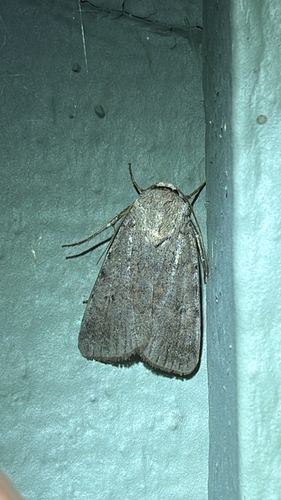
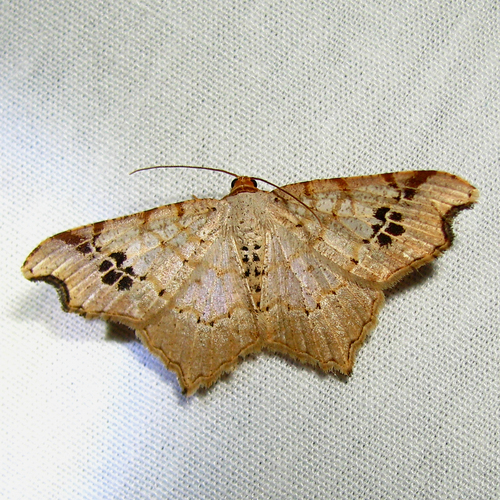
Recent moth photographs from the property.
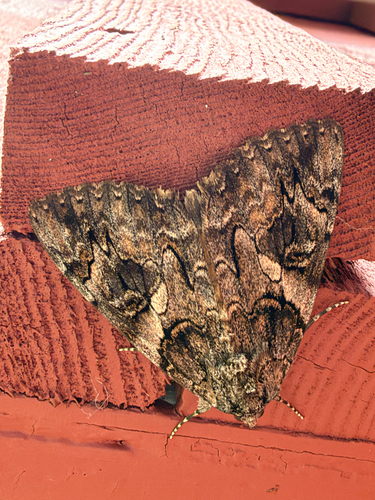
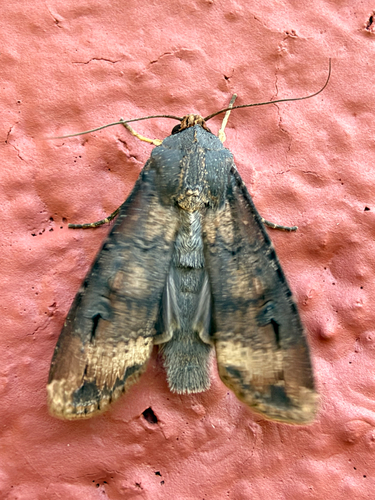
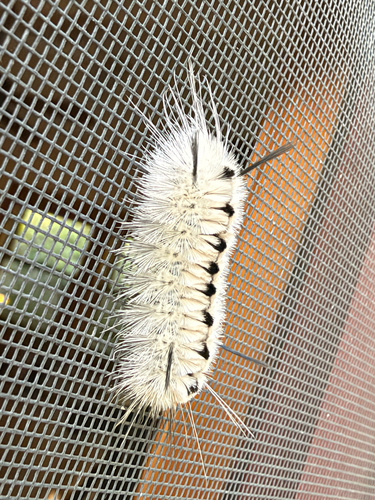
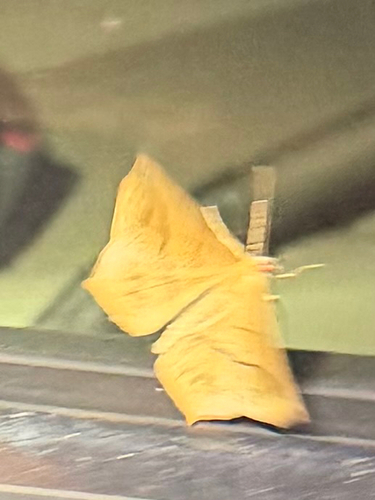
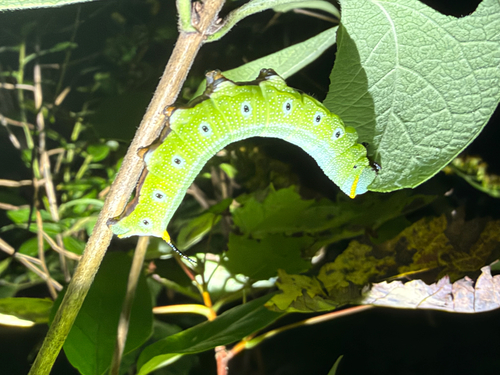
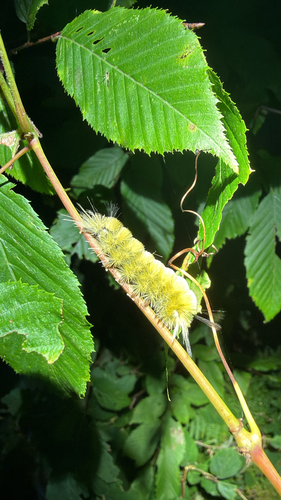
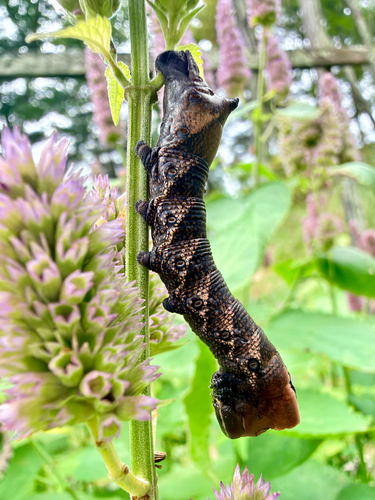
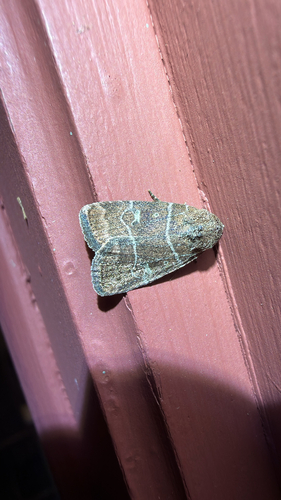
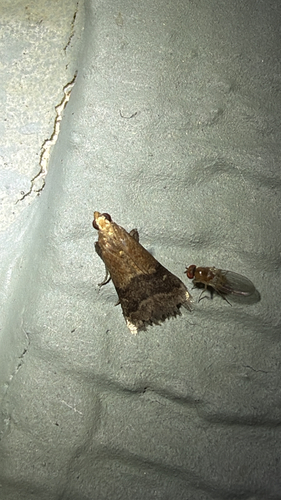
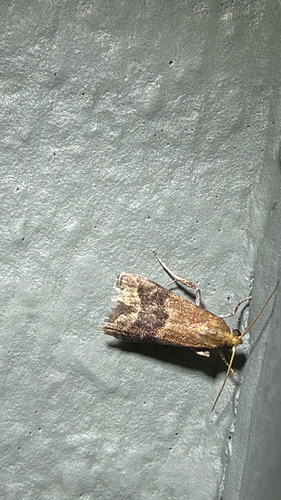
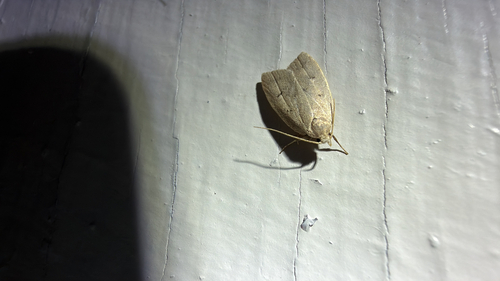
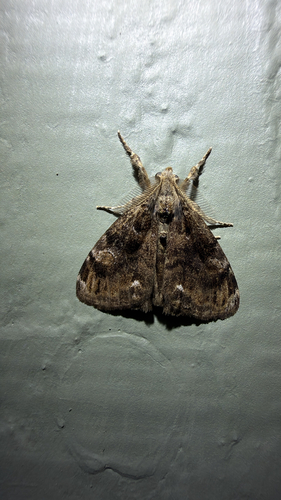
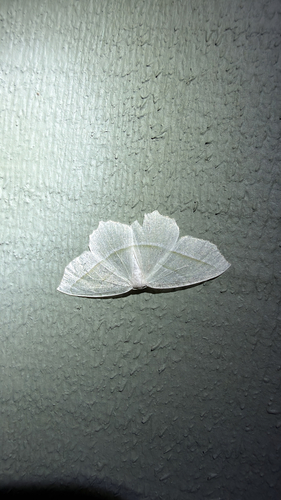
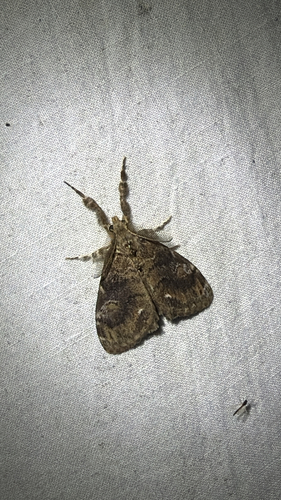
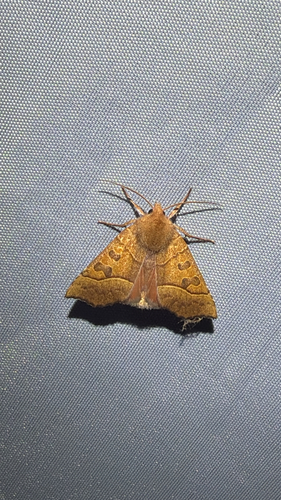
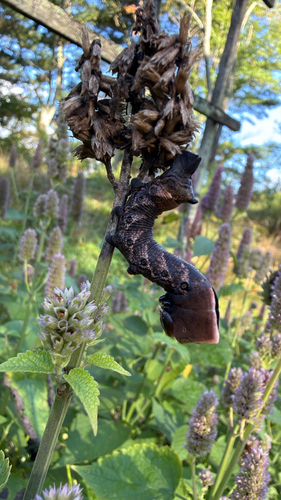
Yet to Find
The Gap List
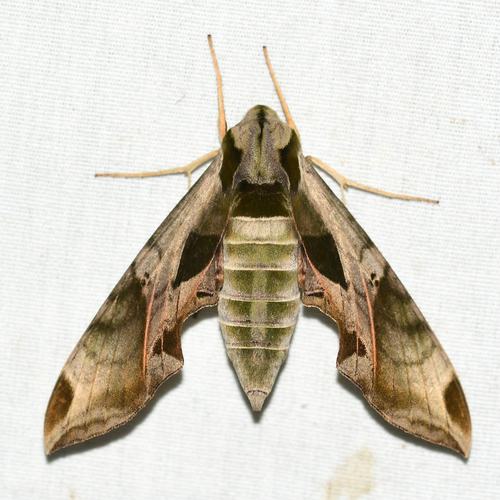
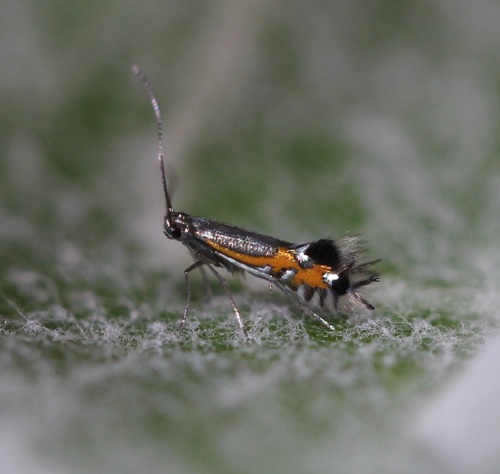
Moth species recorded within ~50 miles but not yet found on the property, ranked by how often they appear in October county records. Tompkins County effort inflates some regional frequencies, especially for micros, so treat this as a practical field queue.
Kingfisher Hollow has recorded 882 of the 1818 moth species documented within ~50 miles — 49% of the regional pool. That already represents 91% of the 970 moths ever recorded across all of Tioga County — a county sparsely enough documented that the ~50-mile regional pool is the truer completeness yardstick. The 13 species below have all been seen by someone nearby. They're not rare. They're not hypothetical. They need the right night, the right trap position, or the right observer paying attention.

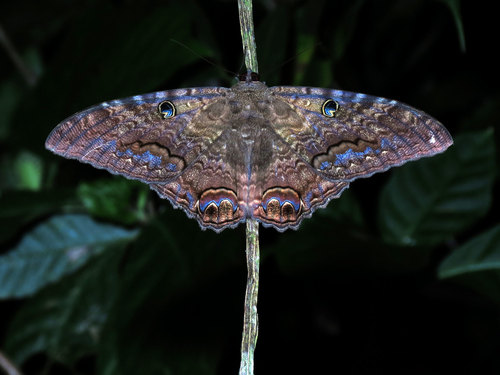
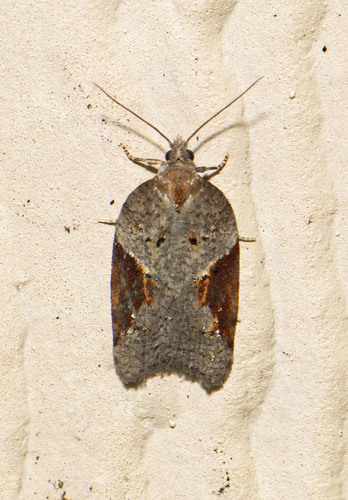

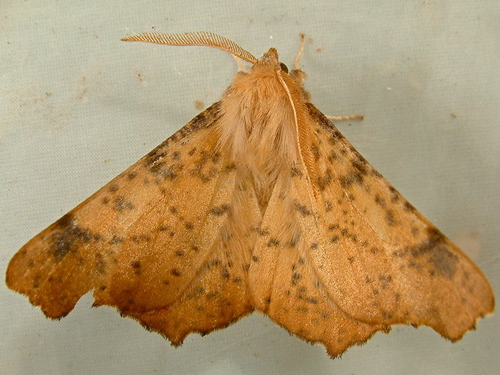
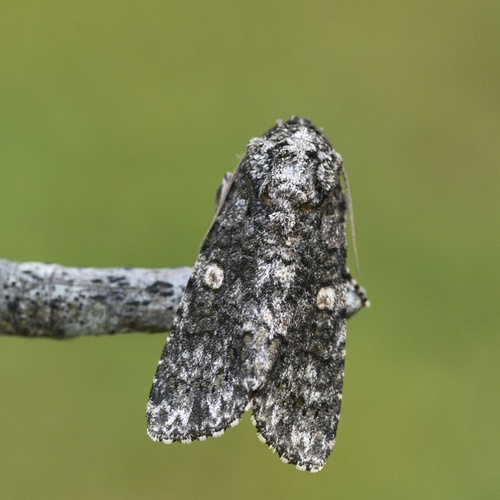
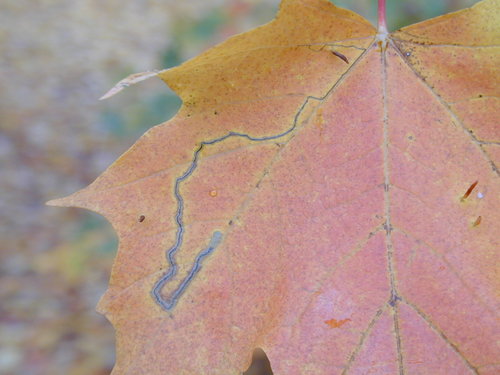
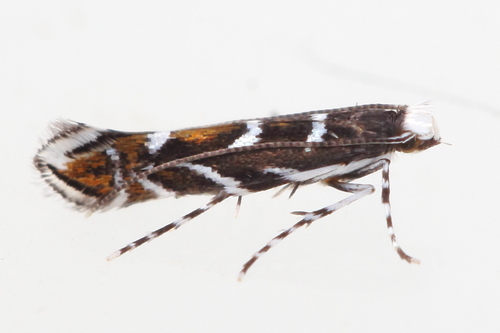
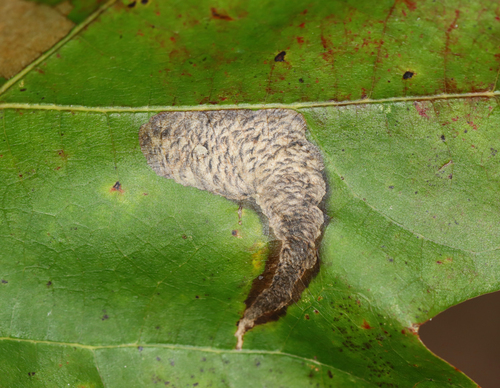
Filtered to species with county records in October — the flight window covering the next two weeks. Tioga County's moth records are thin, and many nearby records come from well-worked Tompkins County, so this list draws from the ~50-mile regional pool with that bias in mind. Species at the top are seen repeatedly nearby in these same weeks; their absence here is usually a survey-method gap, not evidence that the property lacks the habitat. Current host-plant clues keep pointing at grape, dogwood, willow, oak, hickory, basswood, jewelweed, and wetland composites. Catocala underwings come poorly to UV but readily to sugar bait on warm August nights. Different gaps need different methods.
By Family
Where the Gaps Are
The moth fauna isn't evenly sampled. Large, photo-workable families are well represented, while other groups need host-plant work, bait, canopy sampling, colder-season surveys, or expert micro review.
Solid bar: species recorded here. Faint bar: species known within ~50 miles. Numbers at bar ends show the recorded-to-regional ratio. Sorted by recorded species count.
Large, conspicuous families are the best represented because their adults are easier to photograph and identify at lights. The remaining gap is concentrated in small or difficult families and in species reached through host searches, bait, canopy work, and colder-season surveys. Tortricidae now has 124 species documented here; further useful gains will depend on sharp photographs, host association, and expert review.
Standouts
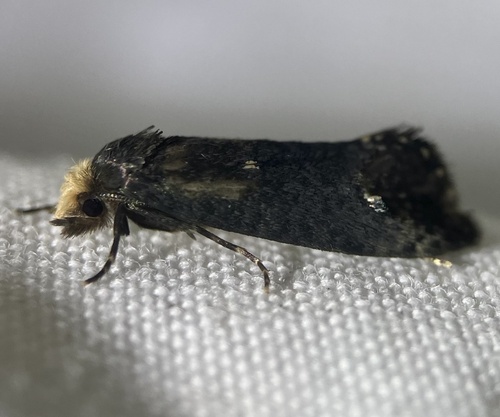
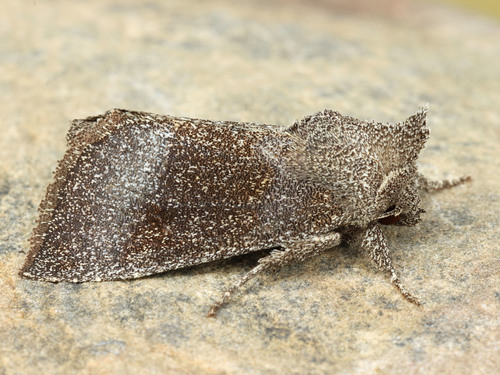
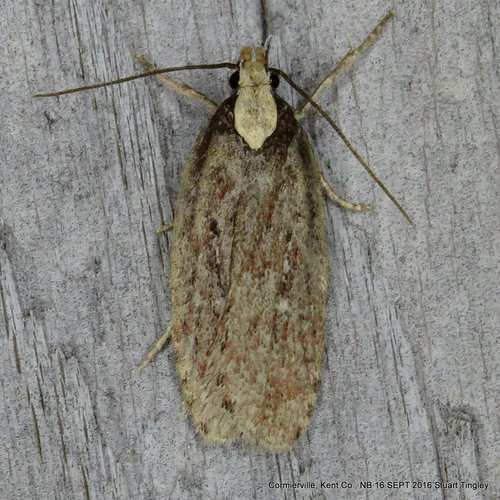
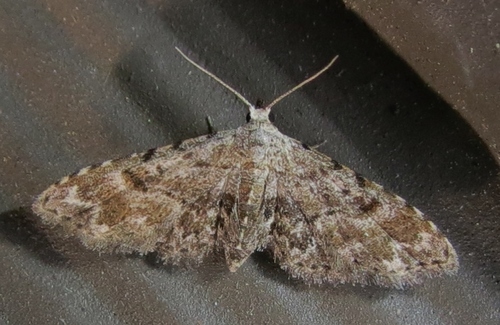
Rare & Notable
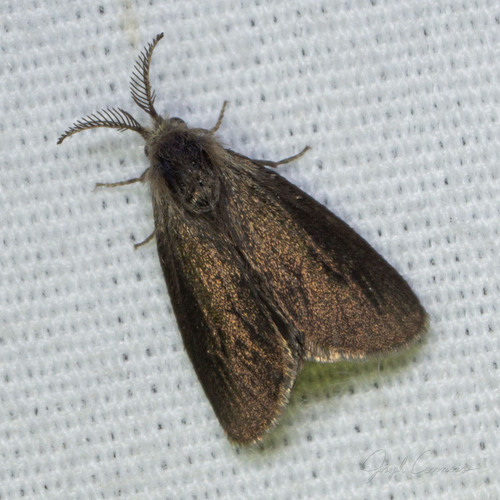
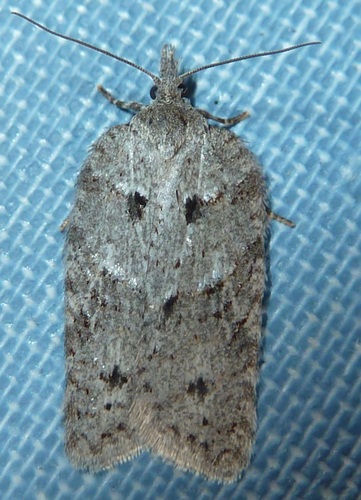
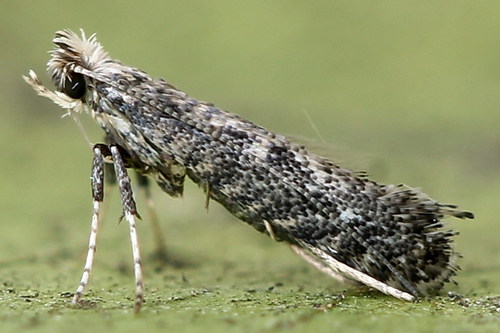
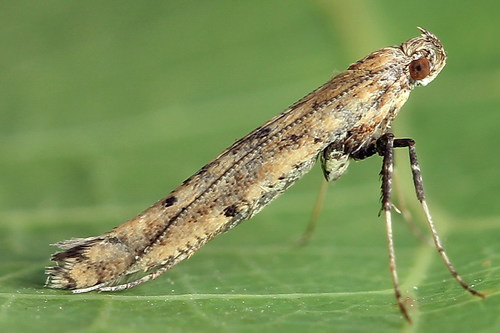
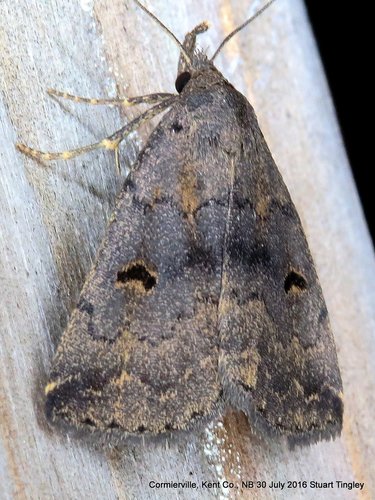
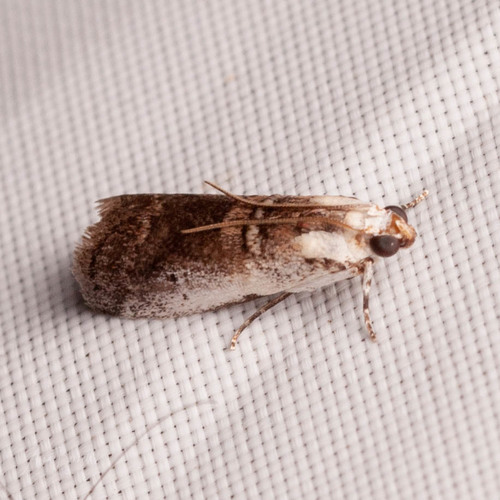
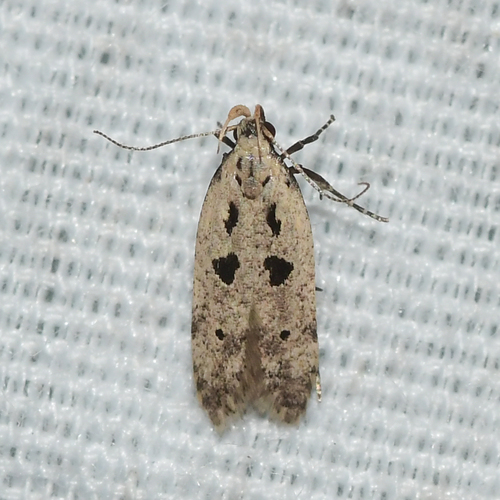
Moths from Kingfisher Hollow with few iNaturalist records in New York. Some are truly notable; others are under-documented micros or hard IDs that need context from MPG, BAMONA, BugGuide, GBIF, and collections before anyone calls them rare.
Inventory Status
Inventory Status
882 species are confirmed, while a sampling model estimates about 1,105. Coverage and evenness describe the documented sample from different angles; neither is a complete habitat-quality test.
Status 1 · Coverage
How much remains?
Chao2 uses the ratio of species seen on exactly one night (Q1) vs. exactly two nights (Q2) across 158 survey sessions to project undetected species. Shaded band: 95% CI. The curve hasn't flattened yet.
Of the 882 moth species confirmed here, 231 have appeared on exactly one night. That high single-night count keeps the accumulation curve rising and yields a Chao2 estimate near 1105 species (95% CI: 1041–1195), or about 80% observed. Treat that as a sampling-based estimate, not a fixed property ceiling. The roughly 223 undetected species are most likely concentrated in cold seasons, bait-feeders, canopy species, and host-linked micros poorly sampled by a ground-level UV sheet.
Status 2 · Community structure
How evenly is life distributed?
Completeness estimates how much remains unseen. Evenness tests whether the documented community is broad or dominated by only a few common species.
Species ranked by total records, log scale. A steep initial drop followed by a long flat tail indicates high evenness — no species dominates. Terracotta: species recorded only once or twice.
Across 882 documented moth species, the gentle slope shows that no single species dominates this photo-vouchered sample. That is consistent with a broad habitat mosaic and 266 recorded wild or established plants, but the curve also reflects survey method and the long tail of one- and two-record species; it is not by itself a habitat-quality test. Repeat records and stronger evidence for that tail will be more informative than attaching a single ecological verdict to the curve.
The Calendar
Flight Seasons
A practical queue for choosing which nights deserve a complete multi-station survey, followed by the whole-night evidence behind it.
Next 10 nights
Thursday, Oct 8 and Sunday, Oct 11
These are the two strongest candidates for a complete, multi-station survey. The ranking estimates documented richness: how many distinct species the usual route is likely to record. Warmer evenings often keep more of the season’s moth community in flight, while a bright moon can reduce what a light sheet draws or reveals. A lower prediction means a narrower expected catch—not that moths are absent.
Updated Oct 2 at 10:20 PM · Open-Meteo forecast
Best available night
Thursday, Oct 8
Full multi-station survey
None/100
Not locally predictive yet
Swipe for all nights →
- Backup
Sat
Oct 3
50/ 100- 51°F at 9 PM
- 55% humidity
- light NE wind
- 0% rain
- 🌖 waning gibbous · 53% lit
- Backup
Sun
Oct 4
63/ 100- 54°F at 9 PM
- 98% humidity
- light S wind
- 8% rain
- 🌗 last quarter · 42% lit
- Skip · cold
Mon
Oct 5
39/ 100- 46°F at 9 PM
- 58% humidity
- moderate NW wind
- 1% rain
- 🌗 last quarter · 32% lit
- Skip · cold
Tue
Oct 6
39/ 100- 40°F at 9 PM
- 80% humidity
- calm
- 0% rain
- 🌘 waning crescent · 22% lit
- Backup
Wed
Oct 7
57/ 100- 49°F at 9 PM
- 83% humidity
- light S wind
- 6% rain
- 🌘 waning crescent · 14% lit
- Focus
Thu
Oct 8
71/ 100- 54°F at 9 PM
- 95% humidity
- calm
- 4% rain
- 🌘 waning crescent · 8% lit
- Backup
Fri
Oct 9
63/ 100- 53°F at 9 PM
- 92% humidity
- light WNW wind
- 10% rain
- 🌑 new moon · 3% lit
- Skip · cold
Sat
Oct 10
39/ 100- 42°F at 9 PM
- 76% humidity
- calm
- 2% rain
- 🌑 new moon · 0% lit
- Worth it
Sun
Oct 11
64/ 100- 55°F at 9 PM
- 91% humidity
- light SSW wind
- 14% rain
- 🌑 new moon · 0% lit
How to read this prediction
On 52 full survey nights, season alone had 23.1 species of held-out error; adding weather and moon changed that to 23.5. That small 0% gain is below the 5% threshold set for calling the local signal predictive.
Temperature and moonlight are clues, not switches. Moths are ectotherms, so warmer air generally supports more flight and more species-level detections. Moonlight is harder to read: a bright sky may weaken the lamp’s relative pull or alter flight activity, while cloud and canopy can soften the effect. The model considers both alongside season, humidity, wind, and rain. It predicts what the survey is likely to document, not the property’s true presence or absence that night.
Survey suitability comes first. Brief or light showers lower the condition score but do not force a skip. If the forecast shows steady rain, a heavy hourly rate, strong wind, or cold crossing the field cutoff, the card shows a condition score instead of a species estimate and names the reason in the pill.
The predicted value is whole-night distinct species documented under your historical adaptive protocol—not individual moth abundance and not a fixed-duration count. A night enters the model as full effort when it has more than 30 nighttime observations spanning more than 60 minutes; the full evening and morning session is then counted. Observation totals and gaps between photos are not used as continuous effort because you document species once and travel between stations. Published light-trap work likewise finds richer samples on warmer nights and lower catches under brighter moonlight, while cautioning that effects vary by method, cloud cover, and moth group. Temperature and richness study · Moonlight and light-trap study.
Effort still varies: productive nights keep you out longer, station routes differ, and unsurveyed nights are missing rather than zero. Predictions therefore include your historical field behavior. Logging planned start/end time, stations completed, and travel time would let a future version separate weather from effort more cleanly.
Swipe sideways for the full year →
Night-by-night data (158 reporting nights)
Counts are distinct moth species assigned to the evening session; records before noon count toward the previous night. A missing date means no moth report, not a zero-species survey.
| Night | Species | Observations |
|---|---|---|
| Oct 1, 2026 | 1 | 1 |
| Sep 26, 2026 | 1 | 1 |
| Sep 25, 2026 | 1 | 1 |
| Sep 22, 2026 | 2 | 2 |
| Sep 16, 2026 | 6 | 8 |
| Sep 15, 2026 | 11 | 12 |
| Sep 14, 2026 | 13 | 14 |
| Sep 13, 2026 | 1 | 2 |
| Sep 12, 2026 | 5 | 6 |
| Sep 11, 2026 | 17 | 19 |
| Sep 7, 2026 | 20 | 21 |
| Sep 6, 2026 | 41 | 46 |
| Sep 4, 2026 | 3 | 3 |
| Sep 3, 2026 | 50 | 58 |
| Sep 2, 2026 | 3 | 3 |
| Sep 1, 2026 | 6 | 7 |
| Aug 31, 2026 | 2 | 2 |
| Aug 30, 2026 | 45 | 49 |
| Aug 29, 2026 | 3 | 3 |
| Aug 28, 2026 | 27 | 32 |
| Aug 27, 2026 | 48 | 55 |
| Aug 26, 2026 | 6 | 6 |
| Aug 25, 2026 | 2 | 2 |
| Aug 23, 2026 | 3 | 3 |
| Aug 22, 2026 | 12 | 13 |
| Aug 21, 2026 | 4 | 4 |
| Aug 20, 2026 | 25 | 25 |
| Aug 19, 2026 | 102 | 119 |
| Aug 18, 2026 | 33 | 36 |
| Aug 17, 2026 | 86 | 98 |
| Aug 15, 2026 | 67 | 75 |
| Aug 14, 2026 | 59 | 68 |
| Aug 13, 2026 | 59 | 63 |
| Aug 11, 2026 | 63 | 76 |
| Aug 10, 2026 | 51 | 53 |
| Aug 9, 2026 | 115 | 139 |
| Aug 8, 2026 | 92 | 111 |
| Aug 7, 2026 | 56 | 65 |
| Aug 6, 2026 | 23 | 23 |
| Aug 5, 2026 | 160 | 213 |
| Aug 4, 2026 | 22 | 25 |
| Aug 3, 2026 | 55 | 61 |
| Jul 30, 2026 | 98 | 117 |
| Jul 29, 2026 | 10 | 11 |
| Jul 28, 2026 | 6 | 6 |
| Jul 27, 2026 | 38 | 45 |
| Jul 26, 2026 | 120 | 147 |
| Jul 25, 2026 | 76 | 85 |
| Jul 24, 2026 | 110 | 168 |
| Jul 23, 2026 | 55 | 72 |
| Jul 22, 2026 | 63 | 72 |
| Jul 21, 2026 | 129 | 160 |
| Jul 20, 2026 | 83 | 95 |
| Jul 19, 2026 | 51 | 80 |
| Jul 18, 2026 | 67 | 84 |
| Jul 17, 2026 | 111 | 135 |
| Jul 16, 2026 | 137 | 170 |
| Jul 15, 2026 | 112 | 134 |
| Jul 14, 2026 | 93 | 108 |
| Jul 13, 2026 | 9 | 9 |
| Jul 12, 2026 | 99 | 119 |
| Jul 11, 2026 | 152 | 225 |
| Jul 10, 2026 | 91 | 134 |
| Jul 9, 2026 | 111 | 133 |
| Jul 8, 2026 | 108 | 119 |
| Jul 7, 2026 | 80 | 92 |
| Jul 5, 2026 | 46 | 50 |
| Jul 4, 2026 | 125 | 182 |
| Jul 3, 2026 | 79 | 95 |
| Jul 2, 2026 | 34 | 42 |
| Jul 1, 2026 | 53 | 62 |
| Jun 30, 2026 | 64 | 83 |
| Jun 29, 2026 | 72 | 82 |
| Jun 28, 2026 | 81 | 98 |
| Jun 18, 2026 | 101 | 125 |
| Jun 17, 2026 | 62 | 71 |
| Jun 16, 2026 | 75 | 79 |
| Jun 15, 2026 | 13 | 13 |
| Jun 14, 2026 | 1 | 1 |
| Jun 13, 2026 | 59 | 74 |
| Jun 12, 2026 | 81 | 94 |
| Jun 11, 2026 | 7 | 7 |
| Jun 10, 2026 | 38 | 49 |
| Jun 9, 2026 | 78 | 86 |
| Jun 8, 2026 | 82 | 91 |
| Jun 7, 2026 | 98 | 124 |
| Jun 5, 2026 | 101 | 153 |
| Jun 4, 2026 | 48 | 51 |
| Jun 3, 2026 | 46 | 51 |
| Jun 2, 2026 | 35 | 36 |
| May 30, 2026 | 8 | 10 |
| May 29, 2026 | 11 | 12 |
| May 28, 2026 | 5 | 6 |
| May 27, 2026 | 45 | 49 |
| May 26, 2026 | 1 | 1 |
| May 25, 2026 | 1 | 1 |
| May 4, 2026 | 16 | 18 |
| Apr 27, 2026 | 9 | 9 |
| Apr 24, 2026 | 9 | 9 |
| Apr 23, 2026 | 5 | 6 |
| Apr 22, 2026 | 3 | 4 |
| Apr 17, 2026 | 11 | 13 |
| Apr 14, 2026 | 4 | 5 |
| Apr 13, 2026 | 16 | 18 |
| Apr 4, 2026 | 17 | 20 |
| Apr 3, 2026 | 1 | 1 |
| Mar 25, 2026 | 1 | 1 |
| Mar 14, 2026 | 1 | 1 |
| Mar 10, 2026 | 5 | 8 |
| Mar 9, 2026 | 4 | 4 |
| Mar 8, 2026 | 3 | 3 |
| Nov 17, 2025 | 1 | 1 |
| Oct 18, 2025 | 1 | 1 |
| Oct 5, 2025 | 2 | 3 |
| Oct 4, 2025 | 3 | 3 |
| Oct 3, 2025 | 10 | 13 |
| Oct 1, 2025 | 3 | 3 |
| Sep 28, 2025 | 25 | 40 |
| Sep 27, 2025 | 18 | 36 |
| Sep 26, 2025 | 26 | 48 |
| Sep 25, 2025 | 3 | 5 |
| Sep 20, 2025 | 19 | 27 |
| Sep 19, 2025 | 18 | 24 |
| Sep 15, 2025 | 19 | 20 |
| Sep 14, 2025 | 29 | 33 |
| Sep 13, 2025 | 23 | 30 |
| Sep 12, 2025 | 17 | 18 |
| Sep 11, 2025 | 30 | 38 |
| Sep 10, 2025 | 23 | 26 |
| Sep 9, 2025 | 18 | 20 |
| Sep 8, 2025 | 8 | 11 |
| Sep 7, 2025 | 11 | 14 |
| Sep 4, 2025 | 11 | 13 |
| Sep 3, 2025 | 23 | 25 |
| Sep 2, 2025 | 12 | 14 |
| Sep 1, 2025 | 24 | 31 |
| Aug 31, 2025 | 24 | 32 |
| Aug 30, 2025 | 16 | 18 |
| Aug 29, 2025 | 1 | 1 |
| Aug 27, 2025 | 25 | 33 |
| Aug 25, 2025 | 32 | 39 |
| Aug 23, 2025 | 61 | 129 |
| Aug 22, 2025 | 1 | 1 |
| Aug 21, 2025 | 1 | 1 |
| Aug 20, 2025 | 8 | 10 |
| Aug 19, 2025 | 3 | 4 |
| Aug 18, 2025 | 1 | 1 |
| Aug 17, 2025 | 1 | 1 |
| Aug 16, 2025 | 2 | 2 |
| Aug 15, 2025 | 76 | 95 |
| Aug 12, 2025 | 33 | 35 |
| Aug 11, 2025 | 46 | 68 |
| Aug 10, 2025 | 44 | 59 |
| Aug 9, 2025 | 37 | 73 |
| Aug 2, 2025 | 1 | 1 |
| Aug 1, 2025 | 1 | 1 |
| Jul 12, 2025 | 1 | 1 |
| Jul 2, 2025 | 1 | 1 |
Each filled square is one evening survey session; the printed number is the distinct moth species reported that night. Color reinforces the total. Blank dates mean no moth report, not zero species.
Whole-night distinct species is the right response for this survey: each species is documented, not every arriving moth, and the route can move among stations with travel gaps. More than 30 nighttime observations across more than 60 minutes marks a full-effort night; neither value is then used as a richness predictor. Effort still varies, so the result describes the historical survey protocol rather than weather acting alone.
Green: species recorded that month. Terracotta: species recorded for the first time ever. Faded months are outside the May–September core flight season. Hover for survey-night counts.
June has produced the most new species per survey night (218 firsts across 19 nights). Months with a tall terracotta bar but a short green one are where additional effort would pay off. The core season runs late June through August; cool nights tend to narrow flight activity, while bright moonlight can reduce what reaches or is detected at the sheet.
Faint line: full observed date range. Thick bar: middle 50% of records (core flight window). Dot: median date. Species with fewer than 3 records omitted. Sorted by median flight date.
Each row is one species. The thick bar is its core flight window — the middle 50% of records. The faint line reaches its earliest and latest confirmed dates. Read all 882 rows together and you get the season's shape: a small March opening, a sharp June rise, and the broadest sampled community in July — 557 species across 31 nights — before the list narrows through late summer and fall. These windows now combine two partial field seasons. They are useful search calendars, not fixed flight limits; additional early spring, late fall, and repeat midsummer nights will keep changing them.
Each row is normalized to its own peak, so a species seen 4 times reads as vividly as one seen 400 times. Hover any cell for raw observation counts.
Scan a row: that species' season, bright at its peak, dark where it disappears. Scan a column: the active community for that month. The sparse winter columns are partly real — few moths fly in January and February — and partly a survey gap, since few people run lights in the cold. Both things are true, and more data will eventually separate them.
Find More
How to Find More
882 species came mostly from night lighting, which selects for large, photo-positive moths. These are the methods that reach the rest: bait-feeders, day and dusk fliers, canopy species, cold-season moths, and the host-linked micros worth documenting without turning the survey into a collection project.
Sugar baiting
Rum-molasses-overripe-banana ferment painted in vertical streaks on mature oak, maple, and shagbark hickory trunks along the mesic slope edge and the floodplain terrace, 50–100 m from the creek where humidity holds.
Warm, humid August nights, 64–75°F, no moon, light wind; bait at dusk and check by headlamp every 45–60 min until 1 AM. Repeat on warm September nights.
Catocala underwings (come poorly to UV) and bait-positive Noctuidae — Eupsilia, Lithophane, Sunira, Amphipyra, Scoliopteryx — that the light sheet misses.
Larval beating
Beating sheet under low streamside Salix and Alnus, plus Carya, Quercus, Acer and Betula on the mesic slope; tap branches and rear what drops.
June–July daytime for peak Tortricidae and Gelechiidae larvae; a second pass in September. Rear larvae on host foliage to confirm species on emergence.
Micro-moths that never reach UV: Tortricidae, Gelechiidae, Coleophoridae case-bearers, Nepticulidae leaf-miners — the bulk of the undetected species.
Canopy light sheet
A second sheet hoisted 10–15 m on a rope-and-pulley over a canopy gap in the mesic slope forest, well above the standard ground sheet.
Calm June–July nights, 60–72°F, humidity above 60%, no moon; run from 30 min before dark to 2 AM alongside the ground sheet.
The Eupithecia complex (20+ species likely) and canopy-flying micro-geometrids and Tortricidae that rarely descend to a ground sheet.
Dual light comparison
A 160W mercury-vapor bulb and a 15W actinic on separate sheets ~30 m apart at the floodplain-creek ecotone, the property's richest edge.
Peak June and July nights, 60–72°F, no moon, light wind; full dark to 2 AM, swapping observers between stations hourly.
Species one light type filters out — MV pulls large Sphingidae, Saturniidae (watch for Hyalophora cecropia) and Catocala; actinic adds small Geometridae and microleps.
Shoulder-season runs
The standard ground sheet at the sheltered creek bank, where the humidity buffer keeps moths flying on cold nights.
Seasons the survey neglects: warm late-September and October nights, November dusk runs at 38–50°F for Operophtera, and late-March/April nights above 45°F.
Cold-season specialists absent from the June/August-heavy record: Operophtera, Sunira, late Noctuidae, and the early-spring Orthosia quaker complex.