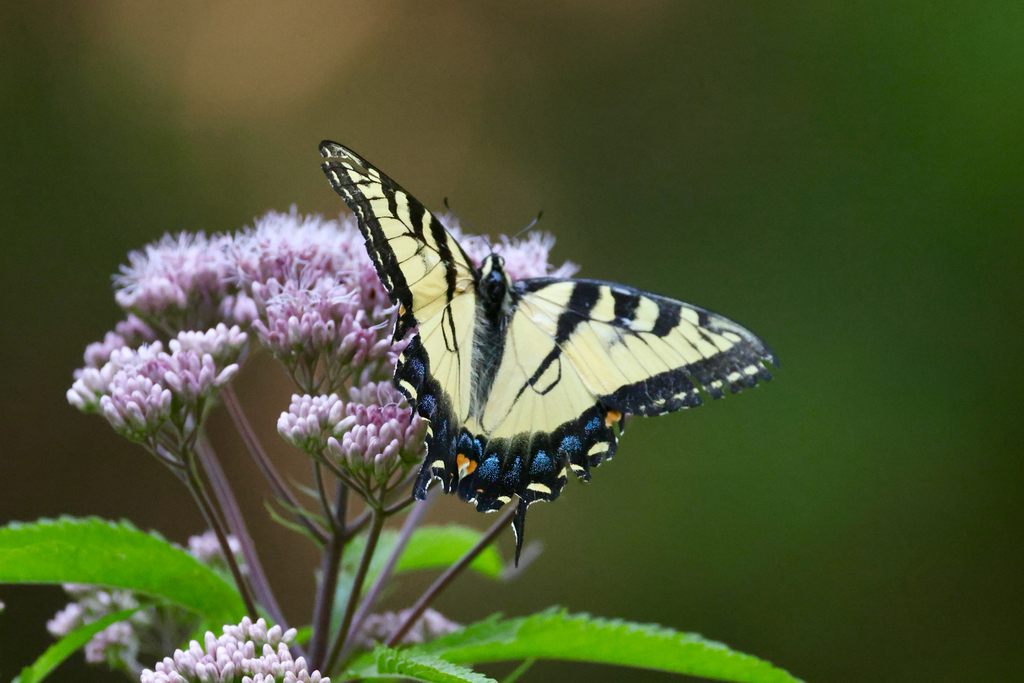
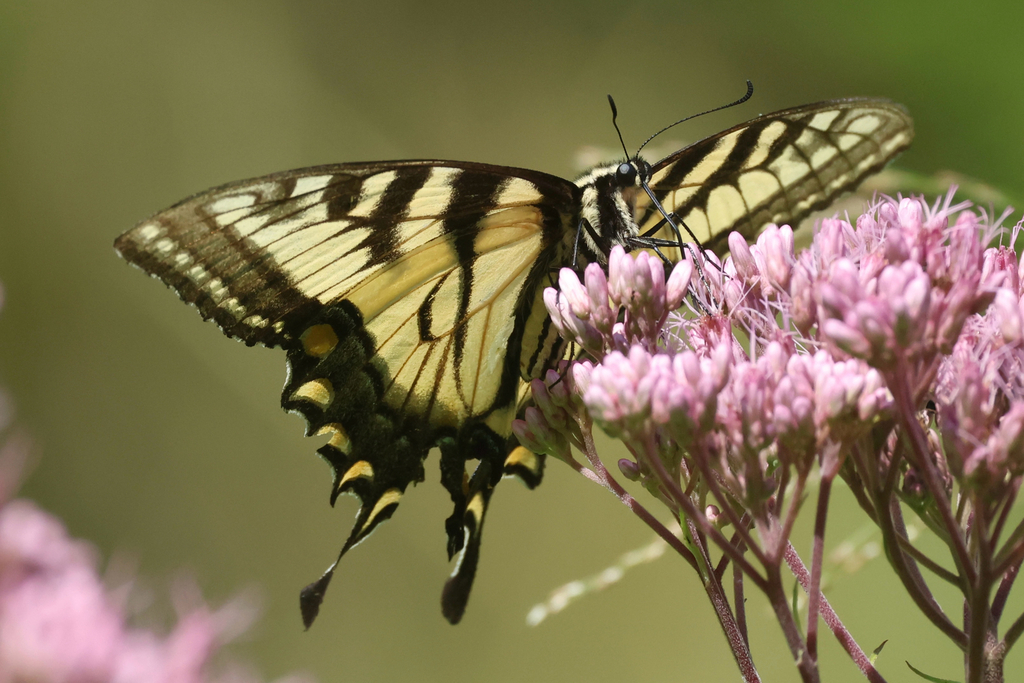
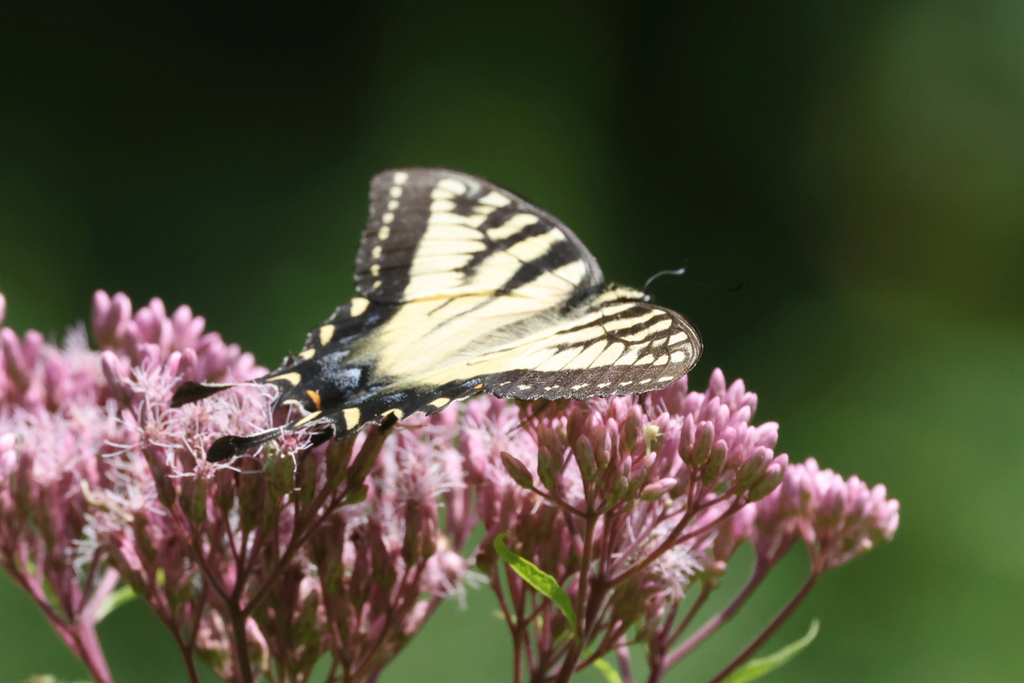
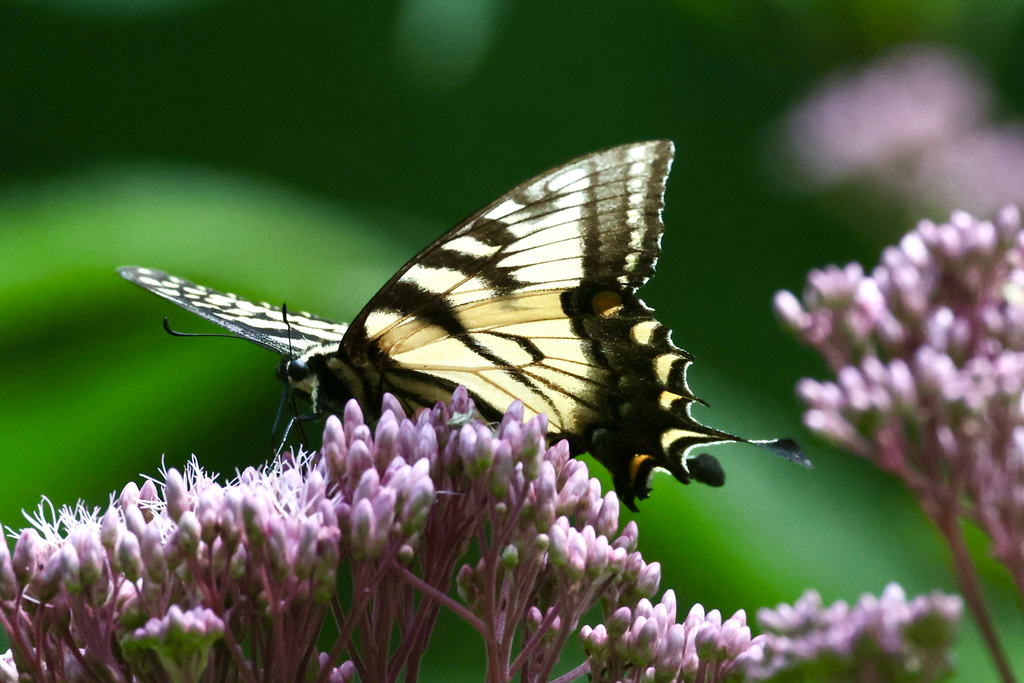
Skip to case study

Living case study · Papilio glaucus complex

Tiger swallowtails, evidence first

A chronological record of Eastern Tiger Swallowtail, Midsummer Tiger Swallowtail, and observations that photographs cannot safely resolve. Source IDs remain visible beside a separate, revisable site assessment.

Observations
9
Years represented
2
Flagged for review
9

The 2025 paper, in plain English

TL;DR: a distinct midsummer species—but not a one-mark ID

These butterflies are close look-alikes. The paper describes Midsummer Tiger Swallowtail as its own species, Papilio solstitius, rather than a recent Eastern × Canadian hybrid. The case rests on its delayed, single annual flight together with molecular, wing-pattern, and natural-history evidence—not on one stripe.

What changed
The midsummer form now has the scientific name Papilio solstitius.
Why it matters
Its unusual post-diapause delay produces a separate midsummer flight, supported by several independent kinds of evidence.
The photo rule
Use a suite of traits. The authors note that some specimens cannot be separated by wing pattern alone.

Quick view · paper Figure 6

Start with the pale band near the forewing edge

On the underside of the forewing, compare the row of pale marks just inside the black outer edge. Each paper row includes several specimens to show real variation—not a perfect field-guide example.

Paper figure row showing variation in the ventral forewing band of Canadian Tiger Swallowtail

b · Canadian

P. canadensis: usually the most continuous, even-edged band; the lunules are not well separated by black.

Paper figure row showing variation in the ventral forewing band of Midsummer Tiger Swallowtail

a · Midsummer

P. solstitius: broadly joined pale lunules, usually with a scalloped inner edge.

Paper figure row showing variation in the ventral forewing band of Eastern Tiger Swallowtail

c · Eastern

P. glaucus: usually separate pale lunules divided by black lines along the veins, though some coalesce.

Cropped quick views from DeRoller et al. (2025), Figure 6 · CC0. Open the complete figure and caption.

Quick view · paper Figure 7

Find the black strip at the hairy lower edge

This is the underside of the hindwing, zoomed in on the inner edge nearest the butterfly’s abdomen. Find the blue-and-orange spot at the wing corner, then follow the hairy lower edge to the left. The feature is the black strip immediately above those hairs.

Cropped paper specimen showing the thick black anal-margin band of Canadian Tiger Swallowtail black strip ↓

b · Thickest

Canadian

About 55–90% of the cell

The black usually fills more than half of the cell and can occupy nearly all of it.

0%100%
Cropped paper specimen showing the medium-width black anal-margin band of Midsummer Tiger Swallowtail black strip ↓

a · Medium

Midsummer

About 30–55% of the cell

Usually broader than Eastern and narrower than Canadian, but it overlaps both.

0%100%
Cropped paper specimen showing the thin black anal-margin band of Eastern Tiger Swallowtail black strip ↓

c · Thinnest

Eastern

About 10–40% of the cell

The black usually reads as a narrower strip along the hairy edge.

0%100%

A second clue: straight versus scalloped

Now follow the boundary where pale yellow meets the black outer wing. Canadian is usually straighter. Eastern is more scalloped—a repeated wavy edge. Midsummer tends to fall between them. This clue also overlaps, so use it with band thickness rather than by itself.

See all paper specimens in Figure 7
Paper figure comparing underside hindwing anal bands in Midsummer, Canadian, and Eastern Tiger Swallowtails
DeRoller et al. (2025), Figure 7: a Midsummer · b Canadian · c Eastern · CC0. Open the complete figure and caption.

Supporting clues—not shortcuts

Forewing outline
Eastern is more often distinctly concave. Angle, sex, and overlap limit this clue.
Flight timing
Midsummer emergence starts in late June to early July in the study. Date adds context; it does not replace morphology.
Female colour
The dark female form occurs in Eastern, not Midsummer. A yellow female alone proves nothing.
Size and colour
Midsummer averages smaller than summer Eastern and richer yellow than Canadian, but photographs rarely provide a reliable scale or colour standard.
Read the full open-access species description

What this page can—and cannot—show

The 2025 species description emphasizes a suite of characters: the ventral forewing submarginal band, hindwing margin and lunules, wing shape, sex-linked traits, phenology, and location. Individual characters overlap. External appearance and date may not be sufficient for a definitive identification.

Accordingly, a dorsal-only, distant, worn, or newly added observation stays unresolved unless multiple visible traits support the same direction. “Strong” is still an analytical reading of photographs—not a genetic determination.

Read the primary species description

Assessment vocabulary—not a confidence score

Strong Eastern / Strong Midsummer
The key ventral character and at least one additional visible morphological trait point the same way.
Leaning Eastern / Leaning Midsummer
Visible evidence has a direction, but the suite is incomplete or limited to secondary characters.
Unresolved Eastern/Midsummer
Usable characters overlap or point in conflicting directions.
Insufficient photographic evidence
The needed surface, detail, angle, or quality is absent; date and source ID do not fill the gap.

Focused comparison

Put the same wing region side by side

Select two to four timeline records. Region focus prioritizes the underside of the forewing; when that region is missing, the comparison says so instead of implying a crop exists.

Comparison view

All observations

Chronological evidence timeline

Years are separated, then records are placed in three comparison windows. Similar dates share a row so spring, midsummer-overlap, and late-summer evidence can be read together.

2025

Expected Midsummer flight

A comparison window only—flight timing does not determine species.

July 18, 2025

Midsummer Tiger Swallowtail — Papilio solstitius

3 photos ventral view worn wear Photo review 2026-08-09

Manual review iNaturalist record

Site analytical assessment

Leaning Midsummer

This is a revisable evidence assessment, not a replacement for the source identification.

Expected Midsummer flight

July 18, 2025

Source identification is preserved

At case-study ingestion
Midsummer Tiger Swallowtail — Papilio solstitius
Current iNaturalist taxon
Midsummer Tiger Swallowtail — Papilio solstitius
Community taxon
No community taxon yet

All observation photos

View class is recorded per image.
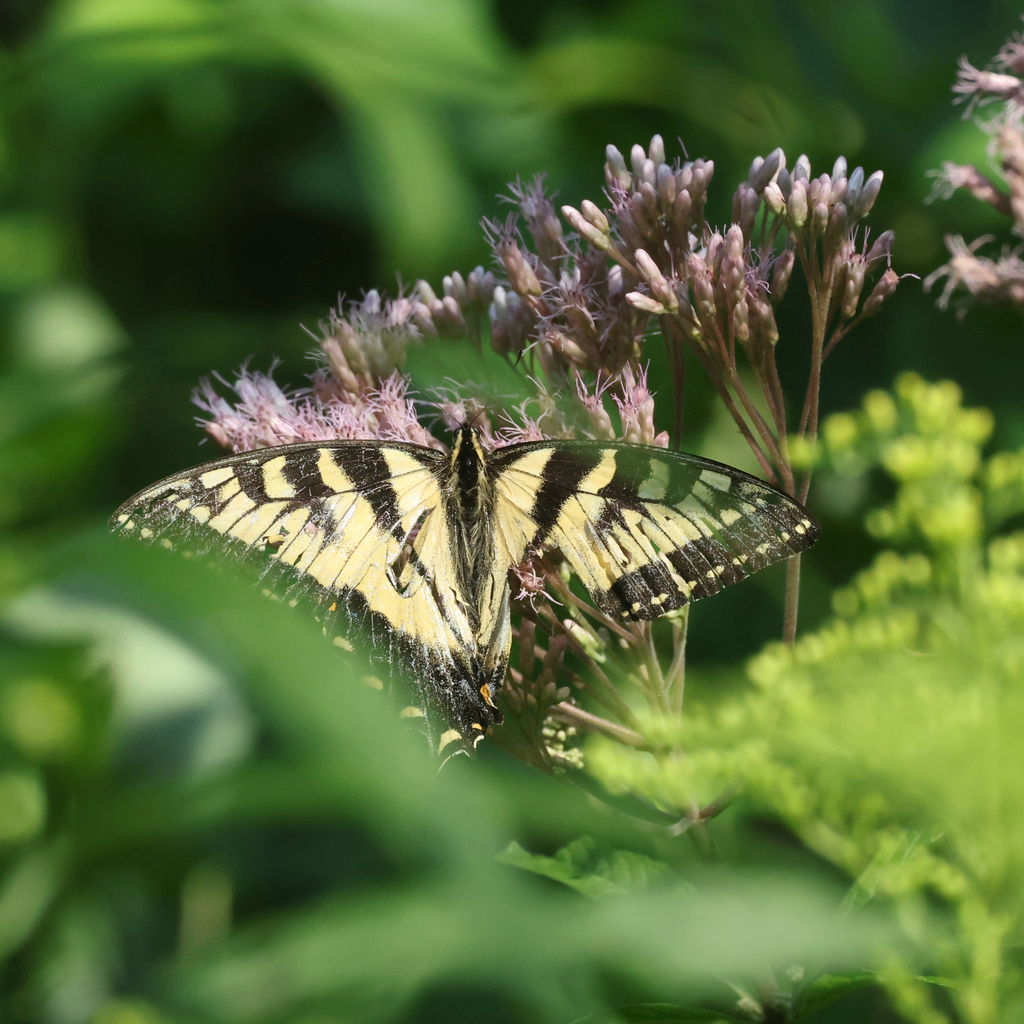
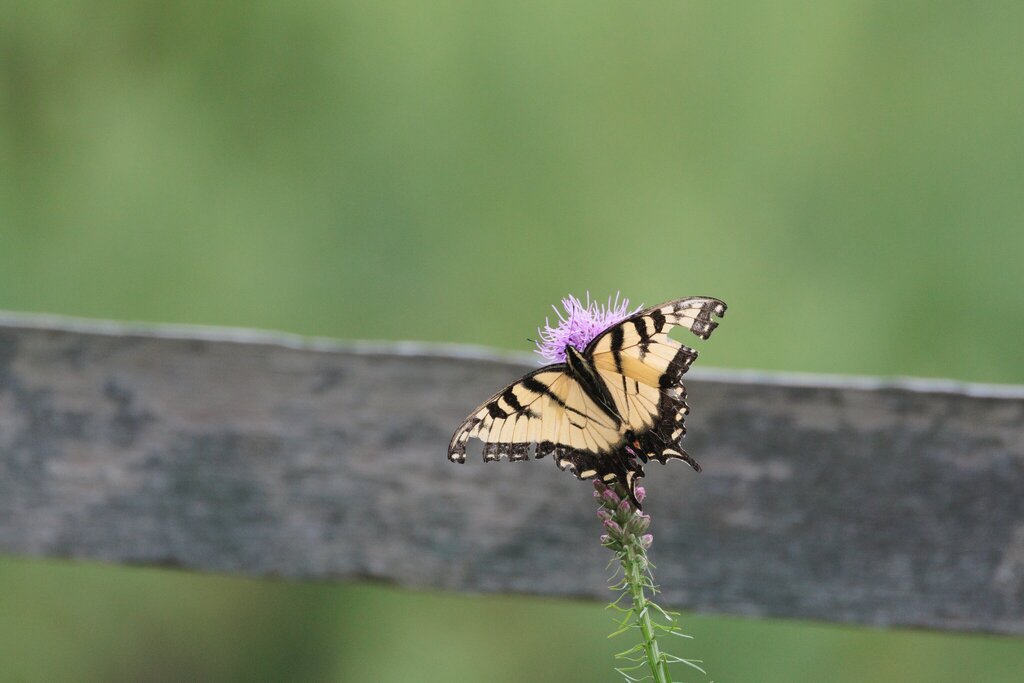
Ventral view in photo 1 of Midsummer Tiger Swallowtail — Papilio solstitius, observed July 18, 2025
ventral Key region not assessable

Ventral side view; useful for orientation, but the forewing band is less clear than in photo 538577705.

(c) Drew Weber, some rights reserved (CC BY-NC) · cc-by-nc
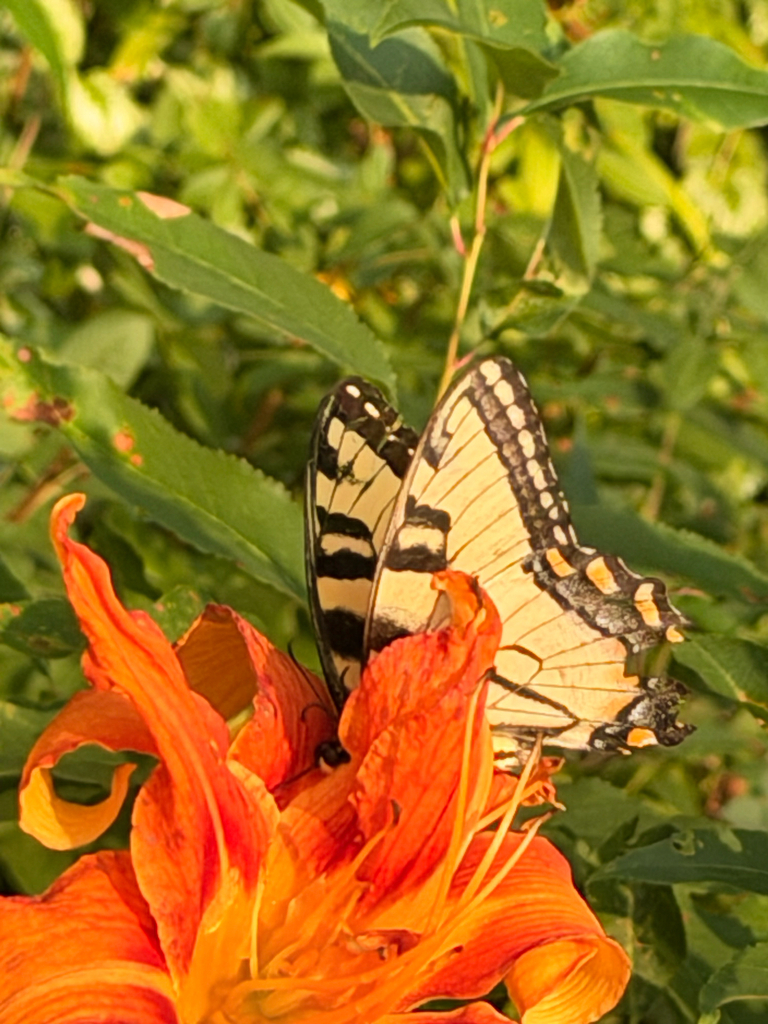
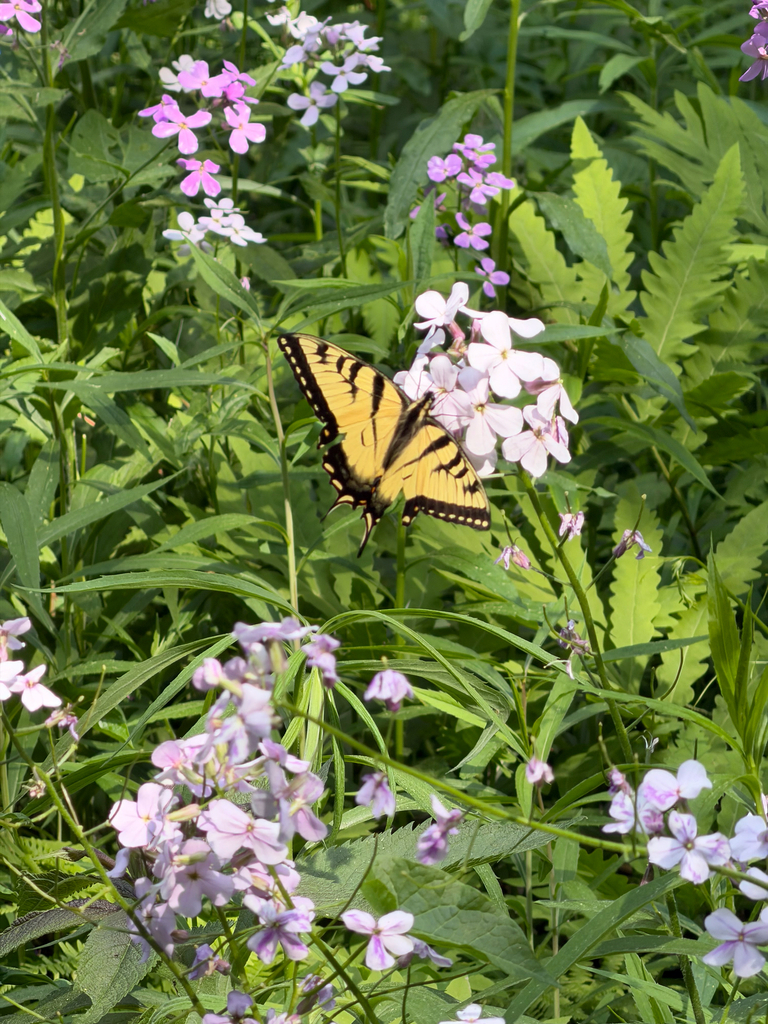
Dorsal view in photo 2 of Midsummer Tiger Swallowtail — Papilio solstitius, observed July 18, 2025
dorsal Key region not assessable

Dorsal view; useful for documenting wear, not the ventral forewing band.

(c) Drew Weber, some rights reserved (CC BY-NC) · cc-by-nc

Ventral view in photo 3 of Midsummer Tiger Swallowtail — Papilio solstitius, observed July 18, 2025
ventral Ventral forewing assessable

The underside forewing and its submarginal band are visible, though worn and oblique.

(c) Drew Weber, some rights reserved (CC BY-NC) · cc-by-nc

Evidence behind the assessment

  • Date and seasonal flight period

    July 18 falls in the late-June–early-August overlap window. Midsummer is expected, but summer Easterns can overlap in the Finger Lakes region. Date is contextual evidence, not a definitive identification.

  • Freshness or wear

    The wing margins are chipped and the tails and hindwing edges show substantial loss, so wear may blur or remove pattern boundaries.

  • Ventral forewing pattern

    Photo 538577705 shows the underside of the forewing. Its submarginal marks appear broadly coalescent and band-like rather than cleanly isolated by black along every vein, which leans Midsummer; wear and angle keep this from being strong evidence by itself.

  • Wing shape

    The most useful underside photograph is oblique, and the worn margin prevents a reliable forewing-shape reading.

  • Sex or dark-form evidence

    The individual is yellow, but sex and any sex-linked pattern character are not clear enough to add evidence.

  • Community and identifier agreement

    iNaturalist has not assigned a community taxon. No independent current identifier is present. No written identification rationale has been provided.

  • Image limitations

    Only one photograph presents a useful ventral forewing angle. Substantial wear can change the apparent separation and shape of marginal marks. No size scale or specimen examination is available.

Why this remains flagged

  • The analytical result is explicitly provisional.

Community IDs and identifier comments

iNaturalist does not label expertise in this response, so every relevant public identifier is shown without assigning an expert credential.

  • Drew Weber

    current · leading

    Midsummer Tiger Swallowtail — Papilio solstitius

    No written rationale provided.

Location and privacy

Kingfisher Hollow, Tioga County, New York

The public source is not obscured, but this page still withholds the property's precise coordinates.
Late-summer Eastern flight

A comparison window only—flight timing does not determine species.

August 21, 2025

Eastern Tiger Swallowtail — Papilio glaucus

1 photo dorsal view worn wear Photo review 2026-07-26

Manual review iNaturalist record

Site analytical assessment

Insufficient photographic evidence

This is a revisable evidence assessment, not a replacement for the source identification.

Late-summer Eastern flight

August 21, 2025

Source identification is preserved

At case-study ingestion
Eastern Tiger Swallowtail — Papilio glaucus
Current iNaturalist taxon
Eastern Tiger Swallowtail — Papilio glaucus
Community taxon
Eastern Tiger Swallowtail — Papilio glaucus

All observation photos

View class is recorded per image.

Dorsal view in photo 1 of Eastern Tiger Swallowtail — Papilio glaucus, observed August 21, 2025
dorsal Key region not assessable

Distant dorsal view of a heavily worn individual.

(c) Drew Weber, some rights reserved (CC BY-NC) · cc-by-nc

Evidence behind the assessment

  • Date and seasonal flight period

    August 21 falls in the late-summer context, when a partial second Eastern flight is more plausible. Date is contextual evidence, not a definitive identification.

  • Freshness or wear

    The single image shows major forewing-edge loss and damaged hindwing tails.

  • Ventral forewing pattern

    The only photograph is dorsal; the underside forewing submarginal band is not visible.

  • Wing shape

    Damage to the outer forewing prevents a reliable shape assessment.

  • Sex or dark-form evidence

    The photograph is too distant and worn for a useful sex-linked or dark-form assessment.

  • Community and identifier agreement

    The iNaturalist community taxon is Eastern Tiger Swallowtail. Independent current identifiers support Eastern. No written identification rationale has been provided.

  • Image limitations

    Only one distant dorsal photograph is available. Heavy edge damage removes the outline needed for wing-shape comparison. The current source identification and late date cannot substitute for missing ventral morphology.

Why this remains flagged

  • The photographs do not support a resolved result.

Community IDs and identifier comments

iNaturalist does not label expertise in this response, so every relevant public identifier is shown without assigning an expert credential.

  • Drew Weber

    current · improving

    Eastern Tiger Swallowtail — Papilio glaucus

    No written rationale provided.

  • spider99

    current · supporting

    Eastern Tiger Swallowtail Complex — Papilio glaucus

    No written rationale provided.

  • stomlins701

    current · supporting

    Eastern Tiger Swallowtail — Papilio glaucus

    No written rationale provided.

  • Drew Weber

    historical · improving

    Common Swallowtails — Papilio

    No written rationale provided.

  • paul_dennehy

    current · improving

    Eastern Tiger Swallowtail Complex — Papilio glaucus

    No written rationale provided.

Location and privacy

Kingfisher Hollow, Tioga County, New York

The public source is not obscured, but this page still withholds the property's precise coordinates.

2026

Spring Eastern flight

A comparison window only—flight timing does not determine species.

June 9, 2026

Eastern Tiger Swallowtail — Papilio glaucus

1 photo dorsal view unknown wear Photo review 2026-07-26

Manual review iNaturalist record

Site analytical assessment

Insufficient photographic evidence

This is a revisable evidence assessment, not a replacement for the source identification.

Spring Eastern flight

June 9, 2026

Source identification is preserved

At case-study ingestion
Eastern Tiger Swallowtail — Papilio glaucus
Current iNaturalist taxon
Eastern Tiger Swallowtail — Papilio glaucus
Community taxon
Eastern Tiger Swallowtail — Papilio glaucus

All observation photos

View class is recorded per image.

Dorsal view in photo 1 of Eastern Tiger Swallowtail — Papilio glaucus, observed June 9, 2026
dorsal Key region not assessable

Distant dorsal view; diagnostic wing regions are too small to assess.

(c) Drew Weber, some rights reserved (CC BY-NC) · cc-by-nc

Evidence behind the assessment

  • Date and seasonal flight period

    June 9 falls in the spring flight context, before the expected late-June onset of the Midsummer flight. Date is contextual evidence, not a definitive identification.

  • Freshness or wear

    The butterfly occupies too little of the frame to separate true scale or edge wear from distance and focus.

  • Ventral forewing pattern

    The available photograph is a distant dorsal view; the underside forewing is not shown.

  • Wing shape

    Distance and angle do not support a detailed distal-margin assessment.

  • Sex or dark-form evidence

    Sex-linked hindwing details are not resolved at this image scale.

  • Community and identifier agreement

    The iNaturalist community taxon is Eastern Tiger Swallowtail. Independent current identifiers support Eastern. No written identification rationale has been provided.

  • Image limitations

    The single butterfly image is distant. No ventral surface or close wing outline is available. The spring date and research-grade source ID are supporting context, not photographic morphology.

Why this remains flagged

  • The photographs do not support a resolved result.

Community IDs and identifier comments

iNaturalist does not label expertise in this response, so every relevant public identifier is shown without assigning an expert credential.

  • Drew Weber

    current · improving

    Eastern Tiger Swallowtail — Papilio glaucus

    No written rationale provided.

  • mabrybiggs

    current · supporting

    Eastern Tiger Swallowtail — Papilio glaucus

    No written rationale provided.

  • stomlins701

    current · supporting

    Eastern Tiger Swallowtail — Papilio glaucus

    No written rationale provided.

Location and privacy

Kingfisher Hollow, Tioga County, New York

The public source is not obscured, but this page still withholds the property's precise coordinates.
Expected Midsummer flight

A comparison window only—flight timing does not determine species.

July 23, 2026

Midsummer Tiger Swallowtail — Papilio solstitius

4 photos dorsal view moderate wear Photo review 2026-07-26

Manual review iNaturalist record

Site analytical assessment

Insufficient photographic evidence

This is a revisable evidence assessment, not a replacement for the source identification.

Expected Midsummer flight

July 23, 2026

Source identification is preserved

At case-study ingestion
Midsummer Tiger Swallowtail — Papilio solstitius
Current iNaturalist taxon
Midsummer Tiger Swallowtail — Papilio solstitius
Community taxon
No community taxon yet

All observation photos

View class is recorded per image.

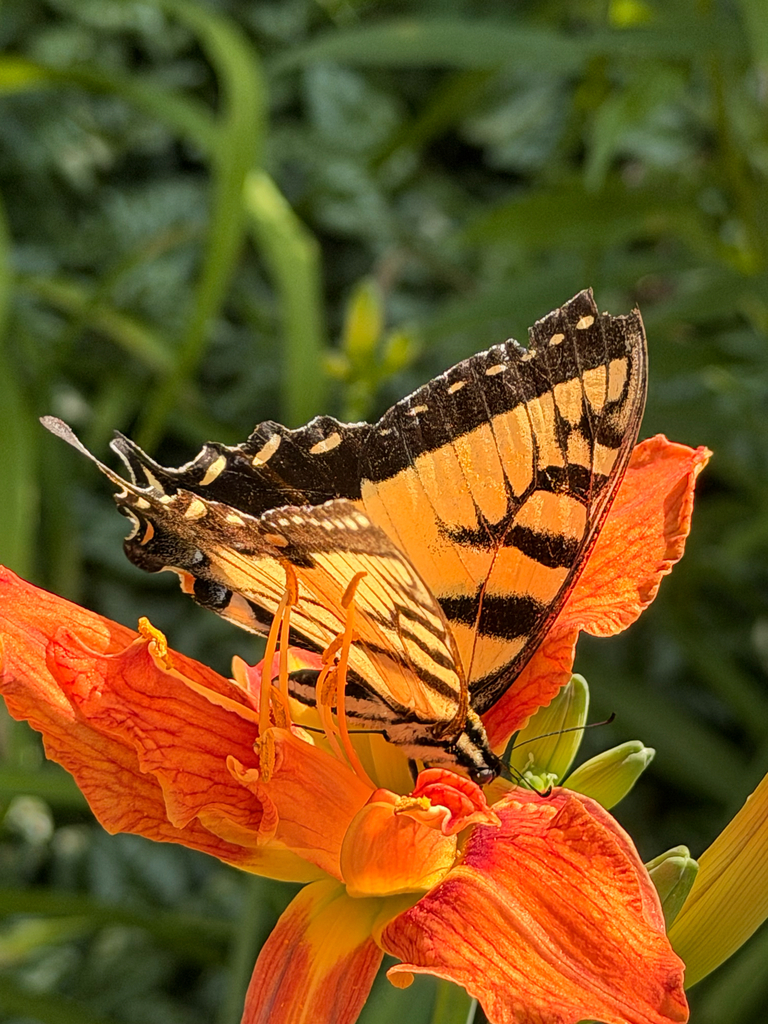
Dorsal view in photo 1 of Midsummer Tiger Swallowtail — Papilio solstitius, observed July 23, 2026
dorsal Key region not assessable

Open dorsal view; underside forewing hidden.

(c) Drew Weber, some rights reserved (CC BY-NC) · cc-by-nc

Partial view in photo 2 of Midsummer Tiger Swallowtail — Papilio solstitius, observed July 23, 2026
partial Key region not assessable

Oblique overlapping wings; a pale underside is present, but the diagnostic band is not readable.

(c) Drew Weber, some rights reserved (CC BY-NC) · cc-by-nc

Dorsal view in photo 3 of Midsummer Tiger Swallowtail — Papilio solstitius, observed July 23, 2026
dorsal Key region not assessable

Open dorsal view; useful for wear, not ventral pattern.

(c) Drew Weber, some rights reserved (CC BY-NC) · cc-by-nc

Dorsal view in photo 4 of Midsummer Tiger Swallowtail — Papilio solstitius, observed July 23, 2026
dorsal Key region not assessable

Dorsal view at an angle; the underside forewing is hidden.

(c) Drew Weber, some rights reserved (CC BY-NC) · cc-by-nc

Evidence behind the assessment

  • Date and seasonal flight period

    July 23 falls in the late-June–early-August overlap window. Midsummer is expected, but summer Easterns can overlap in the Finger Lakes region. Date is contextual evidence, not a definitive identification.

  • Freshness or wear

    The wings show edge nicks and scale abrasion, but most of the outline remains.

  • Ventral forewing pattern

    All four photographs are dorsal or oblique. None shows the underside forewing submarginal band clearly enough to compare separated versus coalescent lunules.

  • Wing shape

    The partly folded and oblique poses make the apparent forewing outline dependent on angle.

  • Sex or dark-form evidence

    The yellow form is visible, but the images do not provide a reliable sex-linked diagnostic character.

  • Community and identifier agreement

    iNaturalist has not assigned a community taxon. No independent current identifier is present. No written identification rationale has been provided.

  • Image limitations

    The key ventral forewing region is absent from every photograph. Oblique wing positions make shape comparisons unreliable. The midsummer date and source ID cannot establish species without visible diagnostic morphology.

Why this remains flagged

  • The photographs do not support a resolved result.

Community IDs and identifier comments

iNaturalist does not label expertise in this response, so every relevant public identifier is shown without assigning an expert credential.

  • Drew Weber

    current · leading

    Midsummer Tiger Swallowtail — Papilio solstitius

    No written rationale provided.

Location and privacy

Kingfisher Hollow, Tioga County, New York

The public source is not obscured, but this page still withholds the property's precise coordinates.

July 24, 2026

Eastern Tiger Swallowtail — Papilio glaucus

4 photos dorsal view fresh wear Photo review 2026-07-26

Manual review iNaturalist record

Site analytical assessment

Leaning Eastern

This is a revisable evidence assessment, not a replacement for the source identification.

Expected Midsummer flight

July 24, 2026

Source identification is preserved

At case-study ingestion
Eastern Tiger Swallowtail — Papilio glaucus
Current iNaturalist taxon
Eastern Tiger Swallowtail — Papilio glaucus
Community taxon
Eastern Tiger Swallowtail — Papilio glaucus

All observation photos

View class is recorded per image.

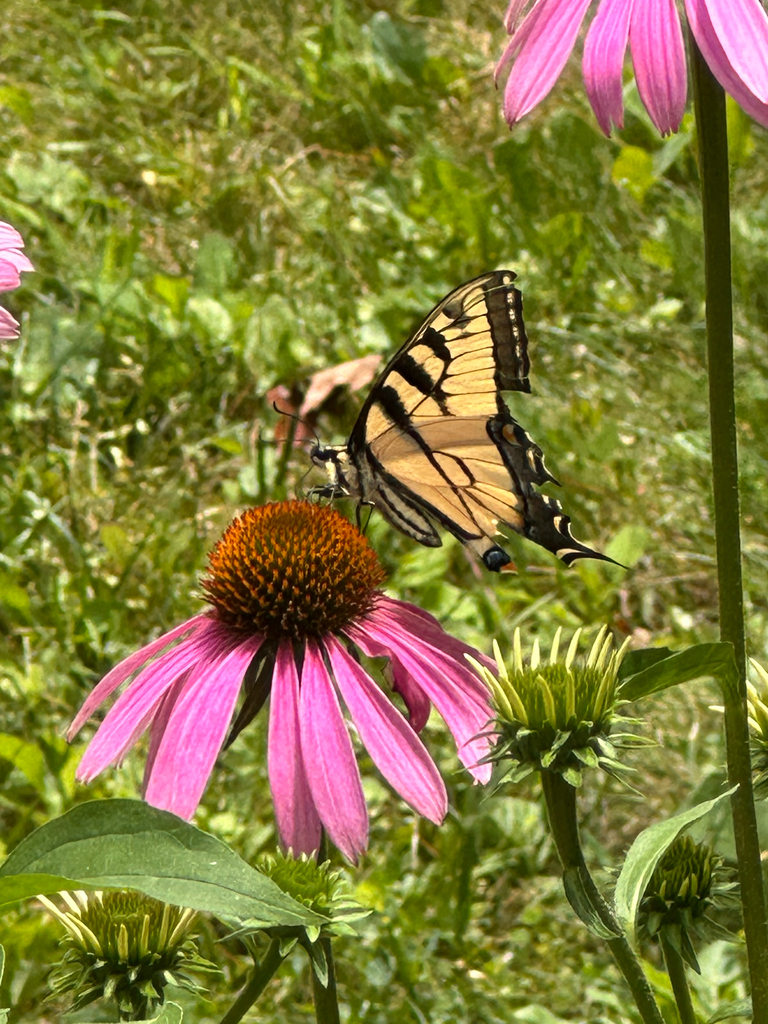
Partial view in photo 1 of Eastern Tiger Swallowtail — Papilio glaucus, observed July 24, 2026
partial Key region not assessable

Oblique mixed-surface view; the underside band is too small and angled to assess.

(c) Drew Weber, some rights reserved (CC BY-NC) · cc-by-nc

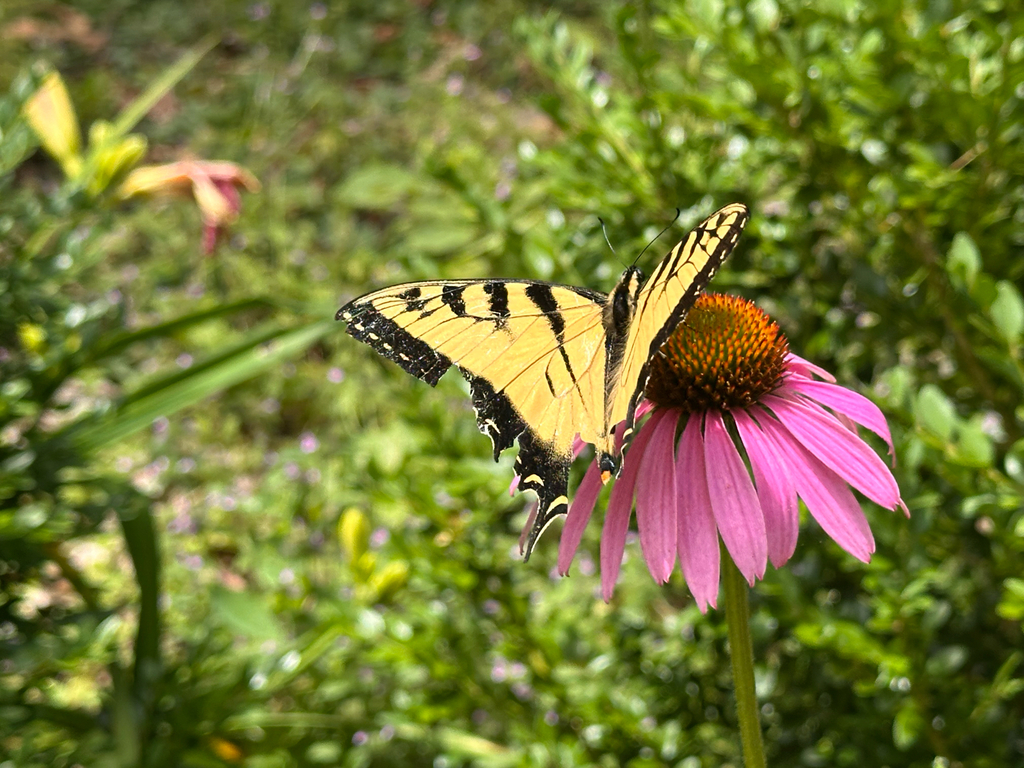
Dorsal view in photo 2 of Eastern Tiger Swallowtail — Papilio glaucus, observed July 24, 2026
dorsal Key region not assessable

Sharp dorsal view showing wing shape and female hindwing pattern.

(c) Drew Weber, some rights reserved (CC BY-NC) · cc-by-nc

Dorsal view in photo 3 of Eastern Tiger Swallowtail — Papilio glaucus, observed July 24, 2026
dorsal Key region not assessable

Sharp dorsal view; key underside band hidden.

(c) Drew Weber, some rights reserved (CC BY-NC) · cc-by-nc

Dorsal view in photo 4 of Eastern Tiger Swallowtail — Papilio glaucus, observed July 24, 2026
dorsal Key region not assessable

Open dorsal view; useful for secondary shape and hindwing evidence.

(c) Drew Weber, some rights reserved (CC BY-NC) · cc-by-nc

Evidence behind the assessment

  • Date and seasonal flight period

    July 24 falls in the late-June–early-August overlap window. Midsummer is expected, but summer Easterns can overlap in the Finger Lakes region. Date is contextual evidence, not a definitive identification.

  • Freshness or wear

    Wing edges, tails, and scale contrast appear crisp and substantially intact.

  • Ventral forewing pattern

    The series is dominated by open dorsal views. The small oblique glimpse does not show the underside forewing band clearly enough for assessment.

  • Wing shape

    The fresh open-wing images show a distinctly concave distal forewing margin, a secondary character that leans Eastern but overlaps with Midsummer.

  • Sex or dark-form evidence

    The photographed yellow-form female appears to show comparatively extensive blue dorsal hindwing scaling and a prominent orange lunule. These secondary characters lean Eastern, but they are not decisive without the ventral forewing.

  • Community and identifier agreement

    The iNaturalist community taxon is Eastern Tiger Swallowtail. Independent current identifiers support Eastern. No written identification rationale has been provided.

  • Image limitations

    No photograph clearly shows the diagnostic underside forewing band. The assessment relies on overlapping secondary dorsal characters. The July date falls in the Midsummer/second-brood Eastern overlap window.

Why this remains flagged

  • The analytical result is explicitly provisional.
  • The Eastern assessment conflicts with the expected midsummer flight date context.

Community IDs and identifier comments

iNaturalist does not label expertise in this response, so every relevant public identifier is shown without assigning an expert credential.

  • Drew Weber

    current · improving

    Eastern Tiger Swallowtail — Papilio glaucus

    No written rationale provided.

  • stomlins701

    current · supporting

    Eastern Tiger Swallowtail — Papilio glaucus

    No written rationale provided.

Location and privacy

Kingfisher Hollow, Tioga County, New York

The public source is not obscured, but this page still withholds the property's precise coordinates.

July 26, 2026

Eastern Tiger Swallowtail — Papilio glaucus

3 photos ventral view moderate wear Photo review 2026-08-09

Manual review iNaturalist record

Site analytical assessment

Strong Eastern

This is a revisable evidence assessment, not a replacement for the source identification.

Expected Midsummer flight

July 26, 2026

Source identification is preserved

At case-study ingestion
Eastern Tiger Swallowtail — Papilio glaucus
Current iNaturalist taxon
Eastern Tiger Swallowtail — Papilio glaucus
Community taxon
Eastern Tiger Swallowtail — Papilio glaucus

All observation photos

View class is recorded per image.

Ventral view in photo 1 of Eastern Tiger Swallowtail — Papilio glaucus, observed July 26, 2026
ventral Ventral forewing assessable

Clear ventral view of the forewing submarginal band.

(c) Drew Weber, some rights reserved (CC BY-NC) · cc-by-nc

Dorsal view in photo 2 of Eastern Tiger Swallowtail — Papilio glaucus, observed July 26, 2026
dorsal Key region not assessable

Dorsal view showing the forewing outline.

(c) Drew Weber, some rights reserved (CC BY-NC) · cc-by-nc

Ventral view in photo 3 of Eastern Tiger Swallowtail — Papilio glaucus, observed July 26, 2026
ventral Key region not assessable

Ventral side view; useful as a wing-shape cross-check, but photo 705461303 remains the clearer view of the diagnostic forewing band.

(c) Drew Weber, some rights reserved (CC BY-NC) · cc-by-nc

Evidence behind the assessment

  • Date and seasonal flight period

    July 26 falls in the late-June–early-August overlap window. Midsummer is expected, but summer Easterns can overlap in the Finger Lakes region. Date is contextual evidence, not a definitive identification.

  • Freshness or wear

    The individual shows minor edge abrasion while retaining the forewing band and overall outline.

  • Ventral forewing pattern

    Photo 705461303 clearly shows the underside forewing. The submarginal lunules are discrete and separated by black along the veins, supporting Eastern.

  • Wing shape

    The accompanying open-wing photographs show a clearly concave distal forewing margin, providing a second Eastern-leaning morphological character.

  • Sex or dark-form evidence

    The individual is yellow; no dark-form evidence is present, and the visible sex-linked characters do not add a separate directional signal.

  • Community and identifier agreement

    The iNaturalist community taxon is Eastern Tiger Swallowtail. Independent current identifiers support Eastern. No written identification rationale has been provided.

  • Image limitations

    Only one photograph provides the key ventral angle. Wing-pattern variation overlaps between species, so the result still depends on a suite rather than one mark. The late-July date conflicts with the expected seasonal direction and requires manual review.

Why this remains flagged

  • The Eastern assessment conflicts with the expected midsummer flight date context.

Community IDs and identifier comments

iNaturalist does not label expertise in this response, so every relevant public identifier is shown without assigning an expert credential.

  • stomlins701

    current · supporting

    Eastern Tiger Swallowtail — Papilio glaucus

    No written rationale provided.

  • Christina Rollo

    current · supporting

    Eastern Tiger Swallowtail — Papilio glaucus

    No written rationale provided.

  • Drew Weber

    current · improving

    Eastern Tiger Swallowtail — Papilio glaucus

    No written rationale provided.

Location and privacy

Kingfisher Hollow, Tioga County, New York

The public source is not obscured, but this page still withholds the property's precise coordinates.

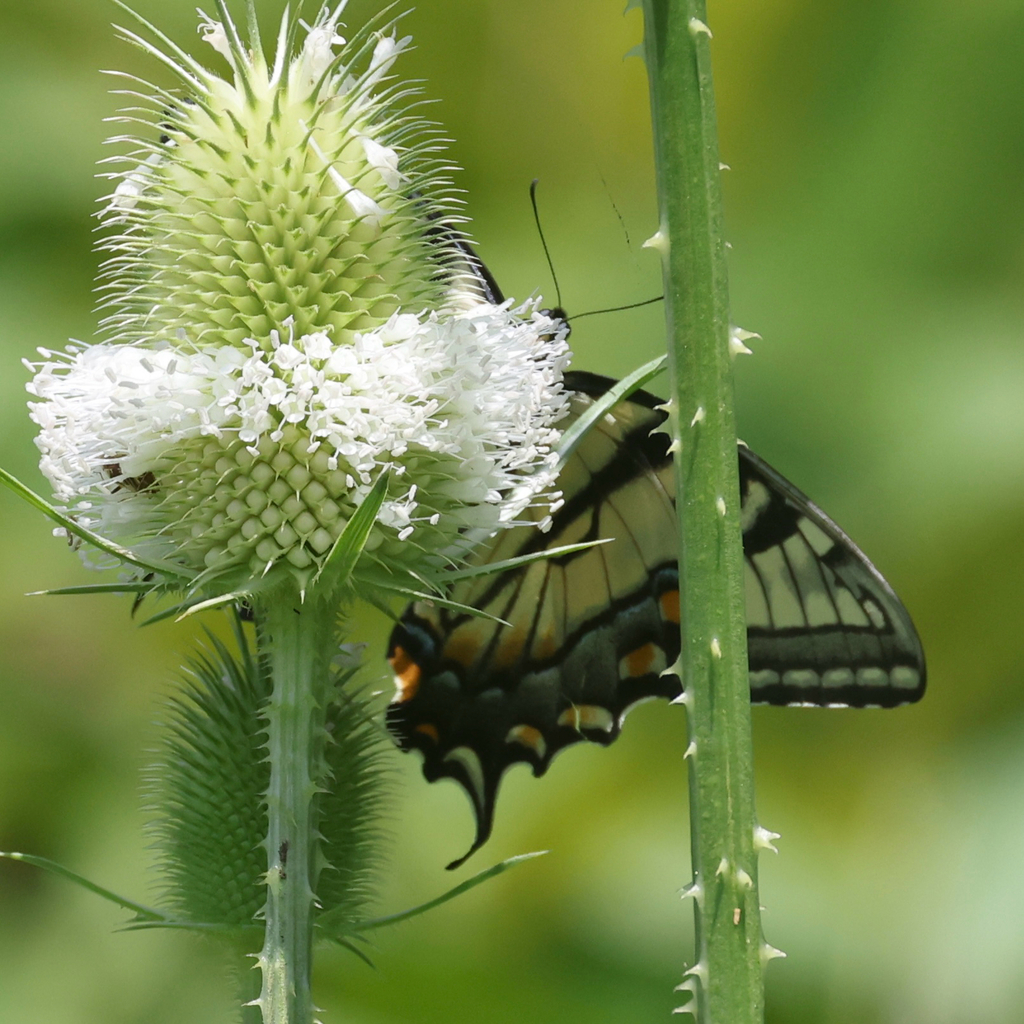
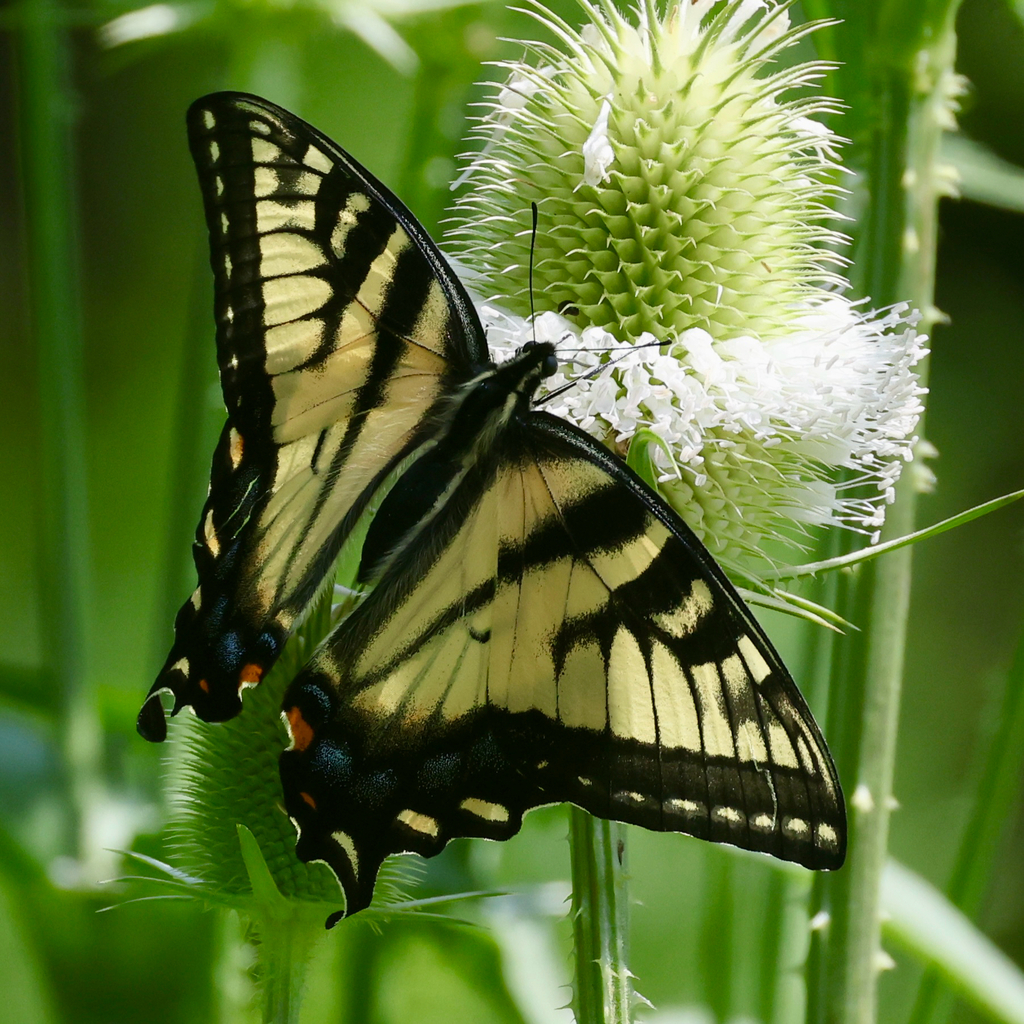
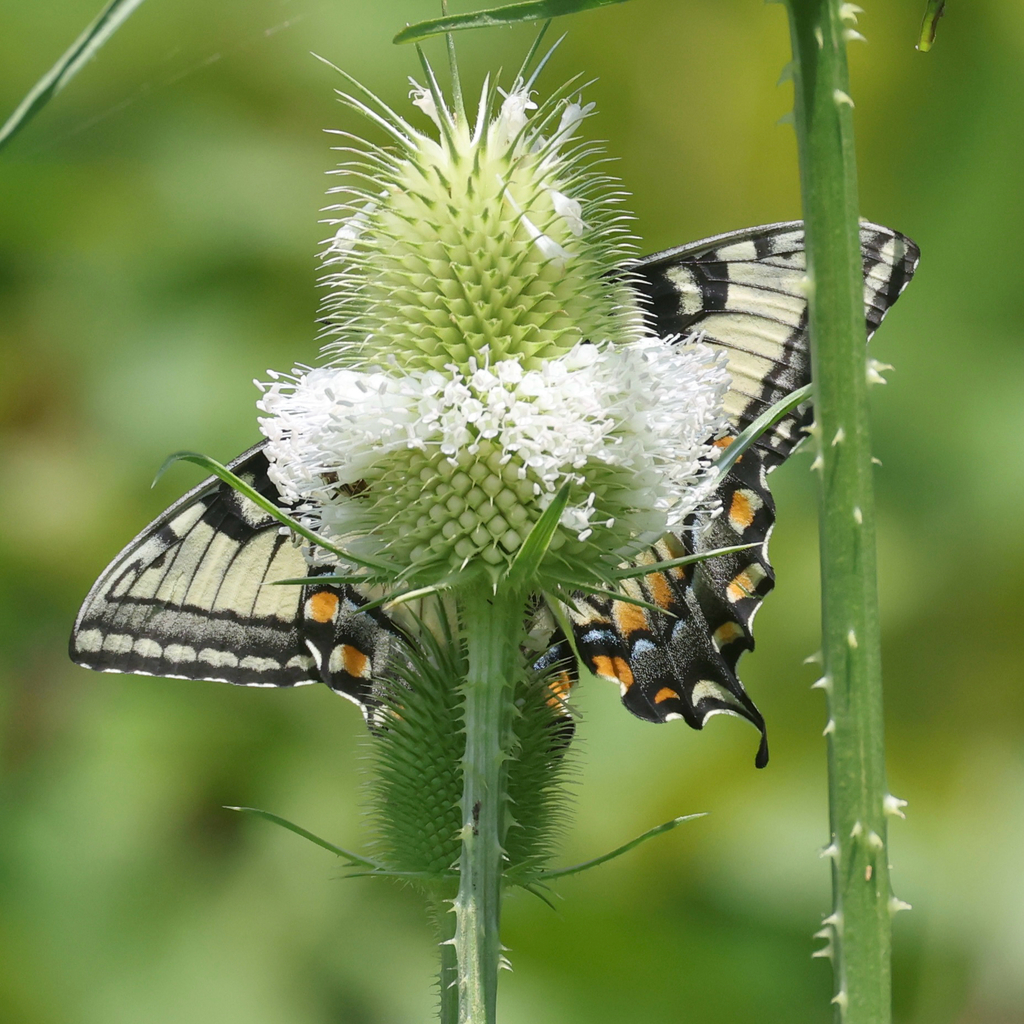
August 8, 2026

Eastern Tiger Swallowtail Complex — Papilio glaucus

3 photos ventral view fresh wear Photo review 2026-08-08

Manual review iNaturalist record

Site analytical assessment

Strong Eastern

This is a revisable evidence assessment, not a replacement for the source identification.

Expected Midsummer flight

August 8, 2026

Source identification is preserved

At case-study ingestion
Common Swallowtails — Papilio
Current iNaturalist taxon
Eastern Tiger Swallowtail Complex — Papilio glaucus
Community taxon
Common Swallowtails — Papilio

The source identification changed after this record entered the case study; both states are retained.

All observation photos

View class is recorded per image.

Ventral view in photo 1 of Eastern Tiger Swallowtail Complex — Papilio glaucus, observed August 8, 2026
ventral Ventral forewing assessable

Side-on ventral view; a stem obscures part of the wing, but the submarginal marks are visible.

(c) Drew Weber, some rights reserved (CC BY-NC) · cc-by-nc

Dorsal view in photo 2 of Eastern Tiger Swallowtail Complex — Papilio glaucus, observed August 8, 2026
dorsal Key region not assessable

Sharp dorsal view showing the forewing outline; the diagnostic underside band is hidden.

(c) Drew Weber, some rights reserved (CC BY-NC) · cc-by-nc

Ventral view in photo 3 of Eastern Tiger Swallowtail Complex — Papilio glaucus, observed August 8, 2026
ventral Ventral forewing assessable

The clearest ventral view, showing discrete submarginal lunules separated by black along the veins.

(c) Drew Weber, some rights reserved (CC BY-NC) · cc-by-nc

Evidence behind the assessment

  • Date and seasonal flight period

    August 8 falls in the late-June–early-August overlap window. Midsummer is expected, but summer Easterns can overlap in the Finger Lakes region. Date is contextual evidence, not a definitive identification.

  • Freshness or wear

    The wing margins, tails, and pattern boundaries are substantially intact; slight scale abrasion does not obscure the photographed characters.

  • Ventral forewing pattern

    Photo 713310709 clearly shows the underside of the forewing. The pale submarginal lunules remain discrete and are separated by black along the veins, supporting Eastern.

  • Wing shape

    Photo 713310713 shows a distinctly concave distal forewing margin, a secondary character that leans Eastern but overlaps with Midsummer.

  • Sex or dark-form evidence

    The individual is yellow, but the visible sex-linked characters do not add a separate directional signal.

  • Community and identifier agreement

    The iNaturalist community taxon is Common Swallowtails. Independent current identifiers stop at the broader complex. No written identification rationale has been provided.

  • Image limitations

    The teasel flower and stems partly obscure the forewing bases and portions of one wing. The result remains a photographic assessment without a specimen, size measurement, or genetic evidence. August 8 falls at the end of the Midsummer and summer-Eastern overlap window, so date alone points in the other direction.

Why this remains flagged

  • The Eastern assessment conflicts with the expected midsummer flight date context.
  • The current iNaturalist source identification stops at the genus Papilio; case-study inclusion and the site assessment depend on the photographed tiger-swallowtail characters.

Community IDs and identifier comments

iNaturalist does not label expertise in this response, so every relevant public identifier is shown without assigning an expert credential.

  • Drew Weber

    current · improving

    Common Swallowtails — Papilio

    No written rationale provided.

  • yixianshuiesuan

    current · leading

    Eastern Tiger Swallowtail Complex — Papilio glaucus

    No written rationale provided.

Location and privacy

Kingfisher Hollow, Tioga County, New York

The public source is not obscured, but this page still withholds the property's precise coordinates.
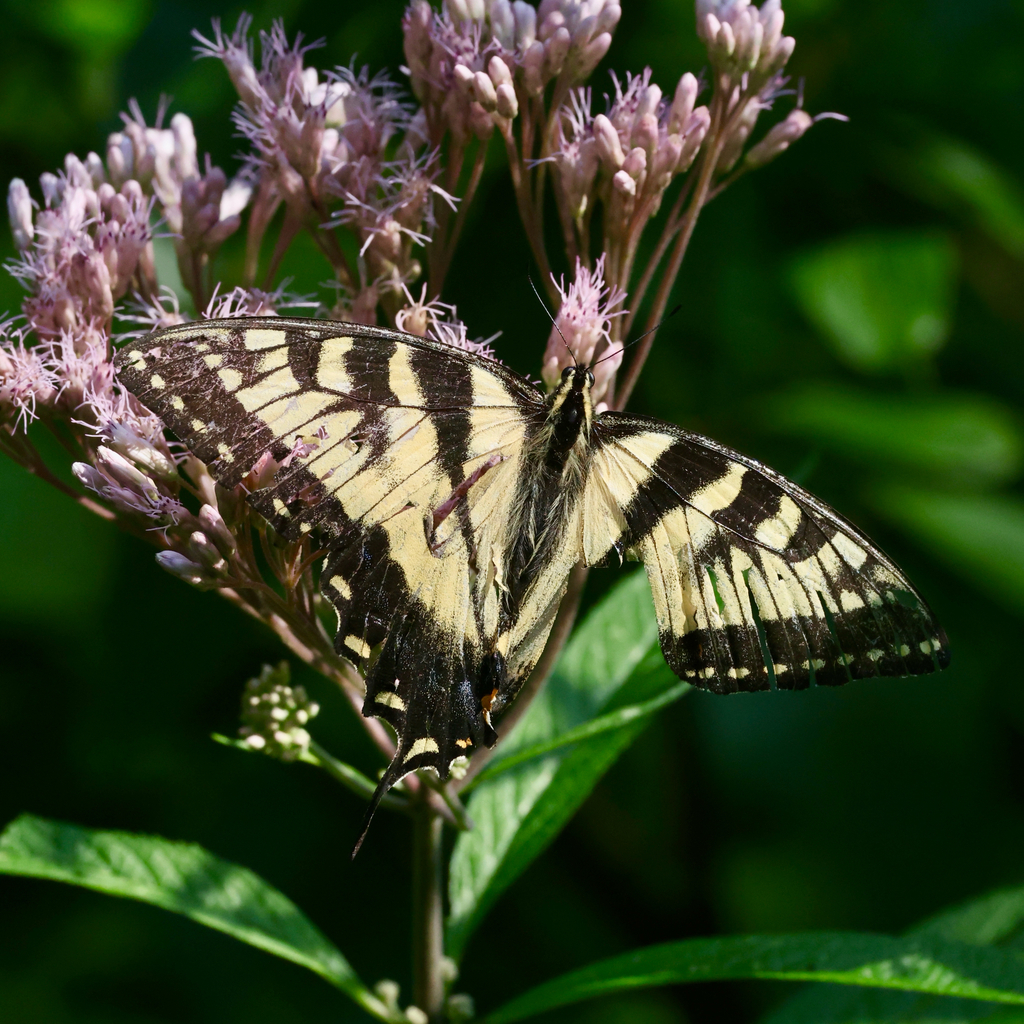
August 9, 2026

Midsummer Tiger Swallowtail — Papilio solstitius

2 photos dorsal view worn wear Photo review 2026-08-09

Manual review iNaturalist record

Site analytical assessment

Insufficient photographic evidence

This is a revisable evidence assessment, not a replacement for the source identification.

Expected Midsummer flight

August 9, 2026

Source identification is preserved

At case-study ingestion
Midsummer Tiger Swallowtail — Papilio solstitius
Current iNaturalist taxon
Midsummer Tiger Swallowtail — Papilio solstitius
Community taxon
No community taxon yet

All observation photos

View class is recorded per image.

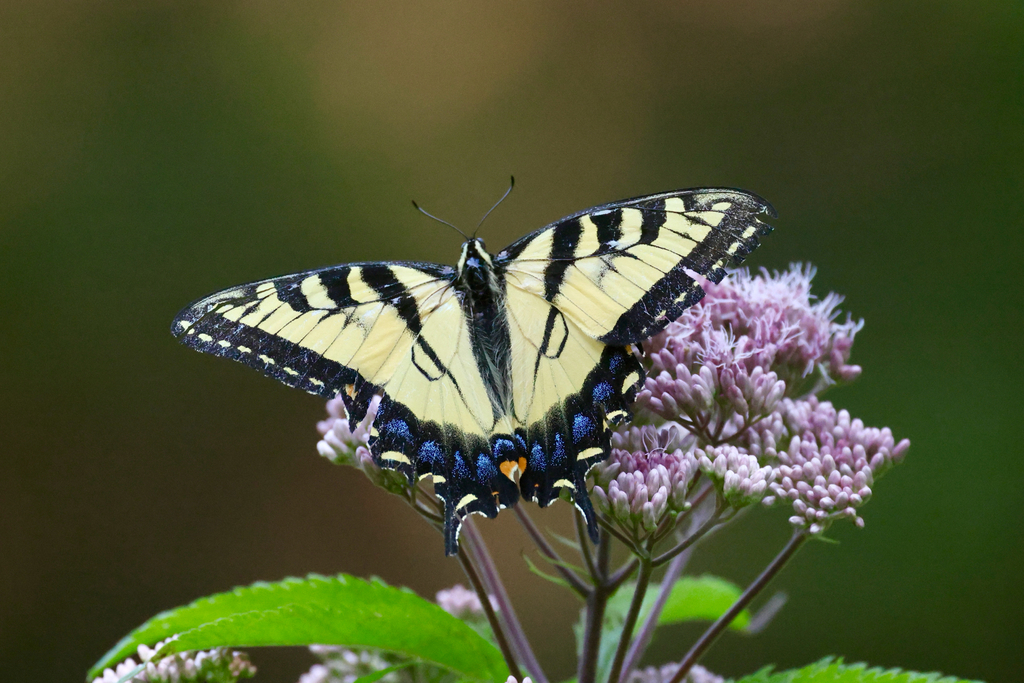
Dorsal view in photo 1 of Midsummer Tiger Swallowtail — Papilio solstitius, observed August 9, 2026
dorsal Key region not assessable

Open dorsal view showing extensive wear; the diagnostic underside forewing band is hidden.

(c) Drew Weber, some rights reserved (CC BY-NC) · cc-by-nc

Dorsal view in photo 2 of Midsummer Tiger Swallowtail — Papilio solstitius, observed August 9, 2026
dorsal Key region not assessable

Open dorsal view partly obscured by vegetation; wear prevents a reliable wing-shape comparison.

(c) Drew Weber, some rights reserved (CC BY-NC) · cc-by-nc

Evidence behind the assessment

  • Date and seasonal flight period

    August 9 falls in the late-June–early-August overlap window. Midsummer is expected, but summer Easterns can overlap in the Finger Lakes region. Date is contextual evidence, not a definitive identification.

  • Freshness or wear

    The wings show extensive scale loss, torn distal margins, and substantial tail and hindwing-edge damage. That wear obscures both pattern boundaries and the original wing outline.

  • Ventral forewing pattern

    Both photographs show the upper wing surface. The underside forewing submarginal band is hidden, so its lunules cannot be compared.

  • Wing shape

    The open-wing pose would normally show the forewing outline, but extensive edge loss and asymmetrical damage prevent a reliable shape comparison.

  • Sex or dark-form evidence

    The individual is yellow, but the worn dorsal photographs do not provide a separate reliable sex-linked or dark-form character.

  • Community and identifier agreement

    iNaturalist has not assigned a community taxon. No independent current identifier is present. No written identification rationale has been provided.

  • Image limitations

    No photograph shows the diagnostic ventral forewing band. Heavy wear removes parts of the margins used for secondary shape comparisons. The August 9 date and current source identification support Midsummer only as context; neither resolves the photographs morphologically. No independent current identifier or written identification rationale is present.

Why this remains flagged

  • The photographs do not support a resolved result.

Community IDs and identifier comments

iNaturalist does not label expertise in this response, so every relevant public identifier is shown without assigning an expert credential.

  • Drew Weber

    current · leading

    Midsummer Tiger Swallowtail — Papilio solstitius

    No written rationale provided.

Location and privacy

Kingfisher Hollow, Tioga County, New York

The public source is not obscured, but this page still withholds the property's precise coordinates.
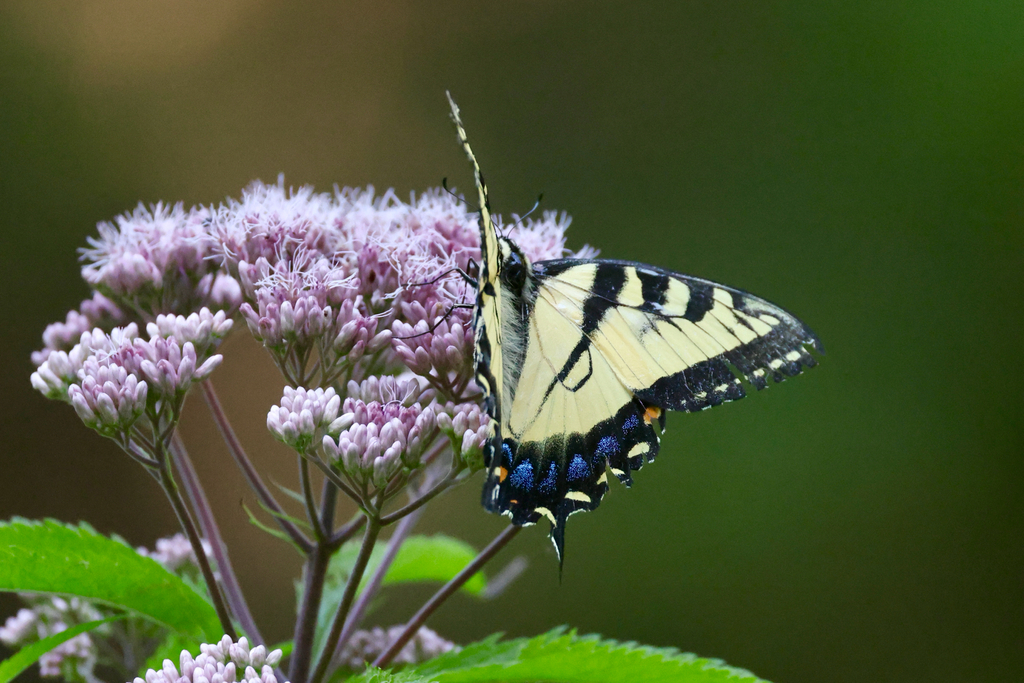
August 10, 2026

Eastern Tiger Swallowtail Complex — Papilio glaucus

2 photos ventral view moderate wear Photo review 2026-08-10

Manual review iNaturalist record

Site analytical assessment

Leaning Eastern

This is a revisable evidence assessment, not a replacement for the source identification.

Expected Midsummer flight

August 10, 2026

Source identification is preserved

At case-study ingestion
Eastern Tiger Swallowtail Complex — Papilio glaucus
Current iNaturalist taxon
Eastern Tiger Swallowtail Complex — Papilio glaucus
Community taxon
No community taxon yet

All observation photos

View class is recorded per image.

Partial view in photo 1 of Eastern Tiger Swallowtail Complex — Papilio glaucus, observed August 10, 2026
partial Key region not assessable

Oblique overlapping-wing view; useful for documenting condition, but the key forewing band is not cleanly readable.

(c) Drew Weber, some rights reserved (CC BY-NC) · cc-by-nc

Ventral view in photo 2 of Eastern Tiger Swallowtail Complex — Papilio glaucus, observed August 10, 2026
ventral Ventral forewing assessable

Side-on ventral view showing discrete pale submarginal lunules separated by black along the veins.

(c) Drew Weber, some rights reserved (CC BY-NC) · cc-by-nc

Evidence behind the assessment

  • Date and seasonal flight period

    August 10 falls in the late-June–early-August overlap window. Midsummer is expected, but summer Easterns can overlap in the Finger Lakes region. Date is contextual evidence, not a definitive identification.

  • Freshness or wear

    The wing patterns remain readable and most margins are intact, although the hindwing edges and tails show minor abrasion and loss.

  • Ventral forewing pattern

    Photo 714692409 shows the underside forewing. Its pale submarginal lunules remain discrete and are separated by black along the veins, supporting Eastern.

  • Wing shape

    The folded and oblique poses do not show the original distal forewing margin clearly enough for an independent shape comparison.

  • Sex or dark-form evidence

    The individual is yellow, but the photographs do not provide a separate reliable sex-linked or dark-form character.

  • Community and identifier agreement

    iNaturalist has not assigned a community taxon. No independent current identifier is present. No written identification rationale has been provided.

  • Image limitations

    Only photo 714692409 provides a readable ventral forewing angle. The daylily and overlapping wings obscure parts of the butterfly in the other photograph. The current iNaturalist identification stops at the Eastern Tiger Swallowtail complex, with no independent current identifier or written rationale. The result remains a photographic assessment without a specimen, size measurement, or genetic evidence.

Why this remains flagged

  • The analytical result is explicitly provisional.
  • The Eastern assessment conflicts with the expected midsummer flight date context.
  • The source identification stops at the broader Eastern Tiger Swallowtail complex; the site assessment depends on the photographed ventral character.

Community IDs and identifier comments

iNaturalist does not label expertise in this response, so every relevant public identifier is shown without assigning an expert credential.

  • Drew Weber

    current · leading

    Eastern Tiger Swallowtail Complex — Papilio glaucus

    No written rationale provided.

Location and privacy

Kingfisher Hollow, Tioga County, New York

The public source is not obscured, but this page still withholds the property's precise coordinates.